 By
By 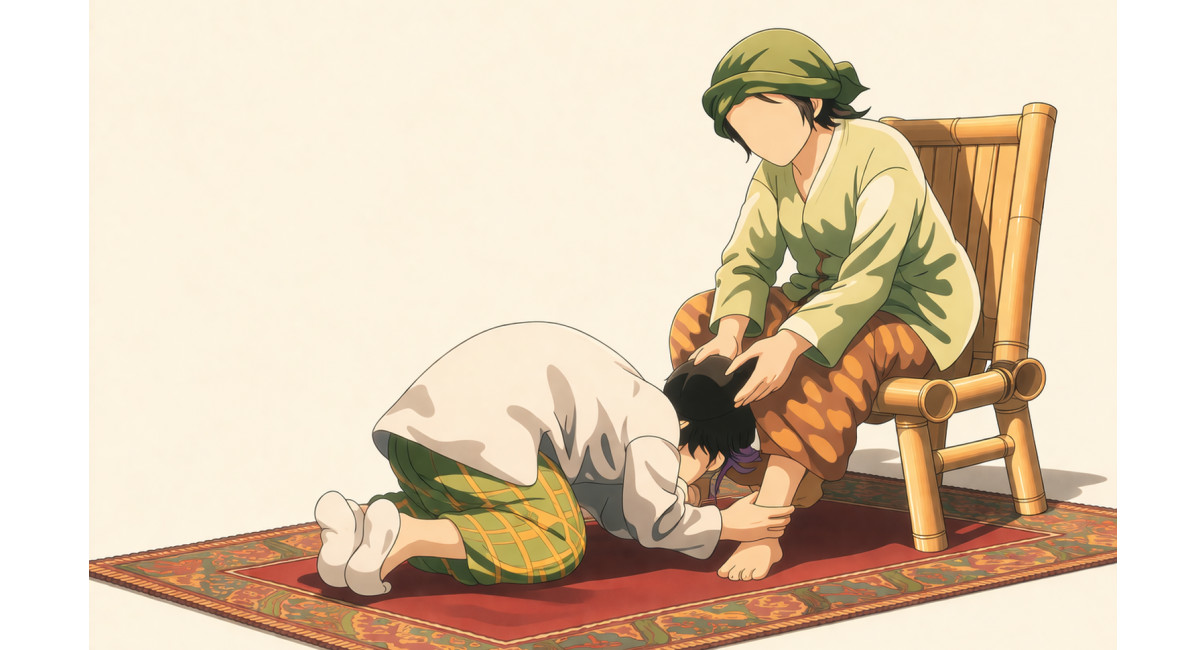
One of the Eastern customs synonymous with nations across the Asian continent is bowing. For instance, in South Asia, there is a tradition of bowing to touch the feet of elders upon meeting; in East Asia, there is the tradition of bowing the back several times when meeting or expressing gratitude; and in Southeast Asia—specifically Indonesia—there is the tradition of bowing the body when passing in front of parents or respected figures. This habit is generally performed not for worship or deification, but simply to show appreciation and respect. Interestingly, such a custom was recorded to have been asked of the Prophet in a hadith. The companion Anas bin Malik said:
قَالَ رَجُلٌ: "يَا رَسُولَ اللهِ، الرَّجُلُ مِنَّا يَلْقَى أَخَاهُ أَوْ صَدِيقَهُ أَيَنْحَنِي لَهُ؟" قَالَ: "لاَ"، قَالَ: "أَفَيَلْتَزِمُهُ وَيُقَبِّلُهُ؟" قَالَ: "لاَ"، قَالَ: "أَفَيَأْخُذُ بِيَدِهِ وَيُصَافِحُهُ؟" قَالَ: "نَعَمْ"
"A man asked, 'O Messenger of Allah, if one of us meets his brother or friend, should he bow to him?' The Messenger of Allah replied, 'No.' He asked again, 'Should he embrace him and kiss him?' He replied, 'No.' He asked, 'Should he take his hand and shake it?' He replied, 'Yes.'" (Narrated by At-Tirmidhi: 2728 and Ibn Majah: 3702). (1).
This hadith explicitly contains a prohibition against bowing to humans, even for the sake of politeness or appreciation. This habit has been widespread since ancient times, leading An-Nawawi to offer stern criticism when explaining this hadith, particularly regarding the phrase "to bow." Imam An-Nawawi said:
ويُكْرَهُ حَنْيُ الظَّهْرِ فِي كُلِّ حَالٍ لِكُلِّ أَحَدٍ، وَيَدُلُّ عَلَيْهِ مَا قَدَّمْنَا فِي الْفَصْلَيْنِ الْمُتَقَدِّمَيْنِ مِنْ حَدِيثِ أَنَسٍ، وَقَوْلُهُ: " أَيَنْحَنِي لَهُ؟ قَالَ: "لَا" وَهُوَ حَدِيثُ حَسَنٍ كَمَا ذَكَرْنَاهُ، وَلَمْ يَأْتِ لَهُ مُعَارِضٌ، فَلَا مَصِيرَ إِلَى مُخَالَفَتِهِ، وَلَا يَغْتَرُّ بِكَثْرَةِ مَنْ يَفْعَلُهُ مِمَّنْ يُنْسَبُ إِلَى عِلْمٍ أَوْ صَلَاحٍ وَغَيْرِهِمَا مِنْ خِصَالِ الْفَضْلِ، فَإِنَّ الْاِقْتِدَاءَ إِنَّمَا يَكُونُ بِرَسُولِ اللهِ صَلَّى اللهُ عَلَيْهِ وَسَلَّمَ
"It is disliked to bow the back for anyone under any circumstance. The evidence for this is the narration we presented in the previous two chapters from the hadith of Anas, specifically the wording, 'Should he bow to him?' The Messenger of Allah replied, 'No.' This is a hasan hadith as we have stated, and there is no other hadith that contradicts it; thus, there is no reason to oppose it. Do not be deceived by the many people who do so, even if they are attributed with knowledge, piety, or other virtuous qualities. Indeed, the example to follow is only that of the Messenger of Allah ﷺ." (Al-Adhkar p. 267)
On the other hand, the act of bowing is included in the linguistic meaning of prostration (sujud). This further strengthens the prohibition of bowing. Imam At-Tabari said when interpreting Allah's command to the Children of Israel to enter the gate of Jerusalem "prostrating" in Surah Al-Baqarah verse 58:
وَأَصْلُ"السَّجُودِ" الْاِنْحِنَاءُ لِمَنْ سُجِدَ لَهُ مُعَظِّمًا بِذَلِكَ، فَكُلُّ مُنْحَنٍ لِشَيْءٍ تَعْظِيمًا لَهُ فَهُوَ سَاجِدٌ
"The origin of 'sujud' is bowing toward the object intended in order to glorify it through that action. Thus, every person who bows to something for the purpose of glorification has performed sujud." (Jami’ Al-Bayan, 2/104)
The companion Abdullah bin ‘Abbas said regarding Allah's word about the deviation committed by the Children of Israel, "Enter the gate prostrating" (Al-Baqarah: 58):
رُكَّعًا مِنْ بَابٍ صَغِيرٍ، فَدَخَلُوا مِنْ قِبَلِ أَسْتَاهِهِمْ
"Meaning (entering) in a state of ruku' (bowing) through a small gate. However, they entered on their buttocks instead." (Reported by At-Tabari in Jami’ Al-Bayan, 2/104 and Ibn Abi Hatim in his Tafsir, 1/117)
At-Tabari’s explanation and Ibn Abbas’s interpretation reinforce that bowing the body or the act of ruku' is included within the scope of the meaning of sujud. Meanwhile, the Messenger of Allah emphasized that prostrating to any creature is impermissible, even with the intention of honoring them, and this remains the Sharia for his Ummah until the end of time, as contained in his saying:
فَإِنِّي لَوْ كُنْتُ آمِرًا أَحَدًا أَنْ يَسْجُدَ لِغَيْرِ اللَّهِ، لَأَمَرْتُ الْمَرْأَةَ أَنْ تَسْجُدَ لِزَوْجِهَا
"For if I were (permitted) to command anyone to prostrate to other than Allah, I would have commanded the woman to prostrate to her husband." (Narrated by Abu Dawud: 2140, At-Tirmidhi: 1159, and Ibn Majah: 1853. This is the wording of Ibn Majah from Mu’adh bin Jabal) (2).
Thus, it is clear that bowing the body or inclining the back to other than Allah, such as the movement of ruku' or something approaching it, is a prohibited matter in Sharia. Scholars differ regarding the ruling on bowing the back, especially if the bowing reaches the stage of resembling ruku'.
First: Prohibited (Haram)
This is the opinion of the Hanafis, Malikis, some Shafi'i scholars, and some Hanbalis. Al-‘Allamah Al-Bujairimi from the Shafi'i school said:
وَالْحَاصِلُ أَنَّ الِانْحِنَاءَ لِمَخْلُوقٍ كَمَا يُفْعَلُ عِنْدَ مُلَاقَاةِ الْعُظَمَاءِ حَرَامٌ عِنْدَ الْإِطْلَاقِ أَوْ قَصْدِ تَعْظِيمِهِمْ لَا كَتَعْظِيمِ اللَّهِ وَكُفْرٌ إنْ قَصَدَ تَعْظِيمَهُمْ كَتَعْظِيمِ اللَّهِ تَعَالَى
"The conclusion is that bowing to a creature, as is commonly done when meeting great figures, is haram absolutely, or when intended to glorify them—though not like the glorification of Allah—and it is kufr (disbelief) if one intends to glorify them as one glorifies Allah Ta’ala." (Tuhfah Al-Habib, 4/241)
Imam Al-Malibari from the Shafi'i school mentioned that this is the opinion of many scholars:
فَوَائِدٌ: وَحَنْيُ الظَّهْرِ مَكْرُوهٌ وَقَالَ كَثِيرُونَ حَرَامٌ وَأَفْتَى النَّوَوِي بِكَرَاهَةِ الْاِنْحِنَاءِ بَالرَّأْسِ
"Benefits: Bowing the back is makruh, but many scholars argued it is haram. An-Nawawi issued a fatwa that bowing the head is makruh..." (Fath Al-Mu’in, 1/598)
Imam As-Syibramilisi from the Shafi'i school said:
وَهِيَ صَرِيحَةٌ فِي أَنَّ الْإِتْيَانَ بِصُورَةِ الرُّكُوعِ لِلْمَخْلُوقِ حَرَامٌ وَبِأَنَّهَا لَمْ تُعْهَدْ لِمَخْلُوقٍ
"This is explicit in stating that performing a movement in the form of ruku' (bowing) for a creature is haram, as such a movement is not recognized for a creature." (Nihayah Al-Muhtaj with Hasyiyah As-Syibramilisi, 7/417)
Imam Ibn ‘Allan from the Shafi'i school said:
وَمِنَ الْبِدَعِ الْمُحَرَّمَةِ الْاِنْحِنَاءِ عِنْدَ اللِّقَاءِ بِهَيْئَةِ الرُّكُوعِ
"Among the prohibited innovations is bowing in the posture of ruku' when meeting." (Dalil Al-Falihin Syarh Riyadh As-Shalihin, 6/363)
Imam Ibn Al-Qayyim from the Hanbali school said:
وَأَصْلُ"السَّجُودِ" الْاِنْحِنَاءُ لِمَنْ تُعَظِّمُهُ، فَكُلُّ مُنْحَنٍ لِشَيْءٍ تَعْظِيمًا لَهُ فَهُوَ سَاجِدٌ قَالَهُ ابْنُ جَرِيرٍ وَغَيْرُهُ، قُلْتُ: وَعَلَى هَذَا فَانْحِنَاءُ الْمُتَلَاقَيَيْنِ عِنْدَ السَّلَامِ أَحَدِهِمَا لِصَاحِبِهِ مِنَ السُّجُودِ الْمُحَرَّمِ، وَفِيهِ نَهْيٌ صَرِيحٌ عَنِ النَّبِى صَلَّى اللهُ تَعَالَى عَلَيْهِ وَسَلَّمَ
"The origin of 'sujud' is bowing to that which one considers great. Thus, every person who bows to something for the purpose of glorification has performed sujud. This was stated by Ibn Jarir and others. I say: based on this, the mutual bowing of two people meeting during the greeting of salam—one to the other—is among the prohibited types of sujud. There is an explicit prohibition from the Prophet ﷺ regarding this." (Ighatsah Al-Lahfan min Mashayid As-Syaithan, 2/308)
Sheikh Al-Islam Ibn Taymiyyah (Hanbali) even signaled a consensus among scholars regarding the prohibition of bowing the back to other than Allah:
وَأَمَّا وَضْعُ الرَّأْسِ عِنْدَ الْكُبَرَاءِ مِنْ الشُّيُوخِ وَغَيْرِهِمْ أَوْ تَقْبِيلُ الْأَرْضِ وَنَحْوُ ذَلِكَ فَإِنَّهُ مِمَّا لَا نِزَاعَ فِيهِ بَيْنَ الْأَئِمَّةِ فِي النَّهْيِ عَنْهُ بَلْ مُجَرَّدُ الِانْحِنَاءُ بِالظَّهْرِ لِغَيْرِ اللَّهِ عَزَّ وَجَلَّ مَنْهِيٌّ عَنْهُ
"As for lowering the head before the elders from among the sheikhs and others, or kissing the ground and the like, these are among the things regarding which there is no dispute among the Imams in prohibiting them. In fact, merely bowing the back to other than Allah Almighty is prohibited." (Majmu’ Al-Fatawa, 27/94)
Hanafi scholars include the discussion of bowing under the Chapter of Al-Karahiyah (disliked matters). It is mentioned in Al-Fatawa Al-Hindiyah:
الِانْحِنَاءُ لِلسُّلْطَانِ أَوْ لِغَيْرِهِ مَكْرُوهٌ لِأَنَّهُ يُشْبِهُ فِعْلَ الْمَجُوسِ... وَيُكْرَهُ الِانْحِنَاءُ عِنْدَ التَّحِيَّةِ وَبِهِ وَرَدَ النَّهْيُ
"Bowing to a ruler or anyone else is makruh (disliked), as it resembles the practice of the Magians... It is also disliked to bow during a greeting, and a prohibition has been recorded regarding it." (Al-Fatawa Al-Hindiyah, 5/369)
However, the meaning of makruh in the Hanafi school differs from that of the majority of scholars. Imam Az-Zaila’i (Hanafi) said:
الْمَكْرُوهُ إِلَى الْحَرَامِ أَقْرَبُ، وَنَصَّ مُحَمَّدٌ - رَحِمَهُ اللهُ - أَنَّ كُلَّ مَكْرُوهٍ حَرَامٌ
"Makruh is closer to haram. Muhammad (bin Al-Hasan) affirmed that every makruh thing is haram." (Kanz Ad-Daqaiq p. 605)
Regarding the Maliki school, Imam Ibn Naji said:
قُلْتُ: ظَاهِرُ الْحَدِيثِ السَّابِقِ إِنَّ مُطْلَقَ اِنْحِنَاءِ الرَّأْسِ مَنْهِيٌّ عَنْهُ...
"I say: the literal meaning of the previous hadith explains that absolutely bowing the head is prohibited..." (Syarh Ibnu Naji, 2/475)
Second: Disliked (Makruh)
This is the famous opinion from the Shafi'i and Hanbali schools, as it was affirmed by An-Nawawi. Imam An-Nawawi was asked:
مَسْأَلَةٌ: الْاِنْحِنَاءُ الَّذِي يَفْعَلُهُ النَّاسُ بَعْضُهُمْ لِبَعْضٍ... مَا حُكْمُهُ؟ الْجَوَابُ: هُوَ مَكْرُوهٌ كَرَاهَةً شَدِيَدَةً
"Question: Regarding the bowing that people do to one another... what is its ruling?" Answer: "It is makruh with a severe dislike." (Fatawa An-Nawawi p. 69)
Imam An-Nawawi also stated in Ar-Raudhah:
وَأَمَّا حَنْيُ الظَّهْرِ فَمَكْرُوهٌ لِلْحَدِيثِ الصَّحِيحِ فِي النَّهْيِ عَنْهُ...
"As for bowing the back, it is makruh based on the authentic hadith regarding its prohibition..." (Raudhah At-Thalibin, 10/235)
Similarly, Imam Al-Buhuti from the later Hanbali scholars stated:
وَيُكْرَه الِانْحِنَاءُ فِي السَّلَامِ...
"It is disliked to bow during the greeting..." (Kassyaf Al-Qina’, 2/153)
Evidence & Reasoning
Because ruku' is different from sujud and is less severe, some argue that only sujud is absolutely prohibited, while bowing or ruku' does not reach the level of haram but is severely disliked. Bowing is often done for certain practical needs, unlike sujud which is performed only for specific purposes. Imam Al-Haytami (Shafi'i) said:
وَخَرَجَ بِالسُّجُودِ الرُّكُوعُ لِأَنَّ صُورَتَهُ تَقَعُ فِي الْعَادَةِ لِلْمَخْلُوقِ كَثِيرًا بِخِلَافِ السُّجُودِ
"Excluded from the act of sujud is ruku' (bowing). For its form (bowing) occurs habitually for creatures frequently (5), unlike sujud." (Tuhfah Al-Muhtaj, 9/91)
This opinion distinguishes between ruku' and sujud. The prohibition in the hadith is interpreted as a prohibition of a makruh nature with severe dislike.
Conclusion
Thus, it is very clear that the custom of bowing specifically to honor or glorify is a prohibited matter in Sharia. It even contradicts Sharia. This prohibition stems from the implication of the Quran and the literal meaning of the Sunnah. Scholars differ regarding the status of the prohibition; some explicitly deem it haram, while others consider it severely makruh. Regardless of whether it is haram or makruh, it is clearly a prohibited act that should be avoided. Such a tradition should not be maintained or preserved, regardless of the reason.
Sumber Referensi:
-
At-Tirmidhi stated in Al-Jami’ Al-Kabir 4/372, “This is a hasan hadith.” Al-Bayhaqi stated in As-Sunan Al-Kubra 7/161, “Handzhalah As-Sudusi is solitary in this narration, while his memory has become mixed (ikhtilat). Yahya Al-Qatthan abandoned—his hadith—due to that confusion in his memory.” In short, the scholars differ regarding the authenticity of this hadith. Nevertheless, the jurists (fuqaha) have used this hadith as an evidence for generations to affirm the recommendation of shaking hands and the prohibition of bowing. Among them is An-Nawawi, who included this hadith in his popular book “Riyadh As-Shalihin” as a form of his authentication of this hadith. Wallahu a’lam.
-
The hadith has supporting narrations in the four Sunan books other than An-Nasai, namely the narration of Aisha by Ibn Majah in his Sunan: 1852, the narration of Abu Hurairah by At-Tirmidhi in his Sunan: 1159, and the narration of Qais bin Sa’ad by Abu Dawud in his Sunan: 2140.
-
The hadith has supporting narrations in the four Sunan books other than An-Nasai, namely the narration of Aisha by Ibn Majah in his Sunan: 1852, the narration of Abu Hurairah by At-Tirmidhi in his Sunan: 1159, and the narration of Qais bin Sa’ad by Abu Dawud in his Sunan: 2140.
-
At-Tirmidhi stated in Al-Jami’ Al-Kabir 4/372, “This is a hasan hadith.” Al-Bayhaqi stated in As-Sunan Al-Kubra 7/161, “Handzhalah As-Sudusi is solitary in this narration, while his memory has become mixed. Yahya Al-Qatthan abandoned—his hadith—due to that confusion in his memory.” In short, the scholars differ regarding the authenticity of this hadith. Nevertheless, the jurists have used this hadith as an evidence for generations to affirm the recommendation of shaking hands and the prohibition of bowing. Among them is An-Nawawi, who included this hadith in his popular book “Riyadh As-Shalihin” as a form of his authentication of this hadith. Wallahu a’lam.
-
Such as bowing to shake hands with someone who is sitting, picking up a fallen object, and so forth.
 ?>)

 ?>)