 By
By 
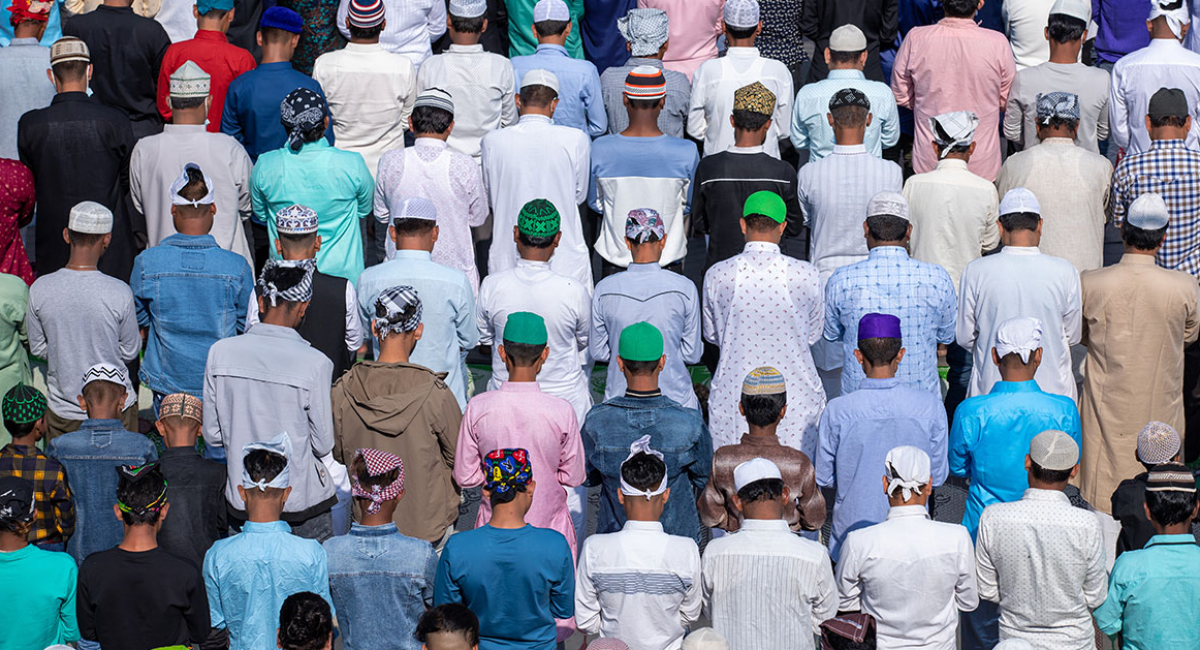
The scholars of the four madhhabs agree that those obligated to attend the Friday prayer (Jumu'ah) are adult, free, resident males who are without valid excuse (1). Friday prayer is not obligatory for women, children, slaves, or travelers (2). This is the famous opinion held by the generality of Muslims worldwide. Al-Mahalli cited this agreement from the four madhhabs:
“The Friday prayer is obligatory upon free, resident men.” (Mazid An-Ni’mah, 1/143)
This differs from the Zahiri school, which maintains that Friday prayer is obligatory for travelers and slaves (3). The obligation of Friday prayer for slaves is also narrated as one of the opinions of Ahmad bin Hanbal (4)—though it is not practiced by the adherents of his madhhab except for Abu Bakr (Ghulam Al-Khallal) (5).
The Zahiri opinion clearly contradicts the consensus of the four madhhabs famously followed by Muslims today in matters of jurisprudence (fiqh). Although the Zahiri opinion aligns with views narrated from some of the Salaf, where some Salaf maintained the obligation of Friday prayer for travelers, among them Az-Zuhri (6), who even considered it obligatory absolutely like the five daily prayers (7). Ibn Hazm said:
“It is the same based on what we mentioned earlier—regarding the obligation of Jumu'ah—for the traveler in his journey, the slave, the free person, and the resident.” (Al-Muhalla bi Al-Atsar, 3/252)
Because of this, some scholars merely mention the non-obligation of Friday prayer for travelers as the opinion of the “majority of scholars,” not ijma’ (consensus of all scholars), as stated by Ibn Al-Mundhir (8), Ar-Rafi’i, An-Nawawi from the Shafi'is, Ibn Qudamah from the Hanbalis, and Ibn Rushd from the Malikis (9). An-Nawawi even said, “The adherents of our madhhab (Shafi'is) say, ‘It is recommended for the traveler to go out (to attend Friday prayer) in order to exit the dispute (among scholars).’” (Al-Majmu’ Sharh Al-Muhadhdhab, 4/485) (10)
Khalil bin Ishaq Al-Maliki said:
“Is it recommended for a traveler to attend it? Some of them (Malikis) said, ‘I did not find any specific text on it.’ It should be detailed. If there is no harm to him in attending and it does not distract him from his needs, then attending is recommended. Otherwise, he has the choice.” (At-Tawdih fi Sharh Mukhtasar Ibn Hajib, 2/47)
Meanwhile, Ibn Abdil Barr and Ibn Al-Qattan from the Malikis, and Ibn Hubayrah from the Hanbalis, asserted the absence of dispute on this matter (the non-obligation of Friday prayer for travelers) and claimed the existence of ijma’(11). Similarly, Qadi Abdul Wahhab Al-Maliki stated “all jurists,” although he excluded Dawud Ad-Dhahiri in this regard (12). Ibn Abdil Barr said, “As for his (Malik's) statement, ‘Jumu'ah is not obligatory on the traveler,’ this is an ijma’ about which there is no further dispute.” (Al-Istidhkar, 2/36)
Evidence & Reasoning of the Majority of Scholars (4 Madhhabs)
The non-obligation of Friday prayer for travelers according to scholars of the four madhhabs is based on the Sunnah of the Messenger of Allah and the opinions of the Prophet's Companions. As for the Sunnah, it is narrated that the Messenger of Allah said:
“Jumu'ah is obligatory except for a woman, a child, a sick person, a slave, or a traveler.” (Narrated by At-Tabarani in Al-Kabir: 1257 and Al-Bayhaqi in Al-Kubra: 5633 from Tamim Ad-Dari. This is At-Tabarani’s wording)
It is narrated that the Prophet said:
“Whoever believes in Allah and the Last Day, then Jumu'ah (prayer) on Friday is obligatory upon him, except for a sick person, a traveler, a child, or a slave.” (Narrated by Al-Bayhaqi in Al-Kubra: 5634 from Jabir bin Abdillah)
“There is no Jumu'ah (prayer) for the traveler.” (Narrated by Ad-Daraqutni: 1582 from Ibn Umar in a marfu’ manner and Al-Bayhaqi in Al-Kubra: 5639 from Ibn Umar in a mawquf manner)
We say “narrated” because none of the three hadiths above are free from defects and weaknesses as asserted by hadith scholars (13). Nevertheless, the hadiths above have a sound (sahih) basis and strengthen (support) one another, and their weakness does not reach a severe level. As for the sound basis, it is narrated by Abu Dawud:
“(The prayer of) Jumu'ah is a duty that is obligatory on every Muslim in congregation except four: a slave, a woman, a child, or a sick person.” (HR. Abu Dawud: 1067 from Tariq bin Shihab)
Al-Bayhaqi said regarding this hadith:
“This is the preserved narration and is mursal, and it is a good mursal (14). It has supporting narrations (shawahid) which we have mentioned in the book of As-Sunan. In some of its wordings is ‘the sick person,’ and in some is ‘the traveler.’” (Ma’rifah As-Sunan wa Al-Atsar, 4/329)
It is not only verbal Sunnah (qauliyah) in the form of the Prophet's sayings, but also the Prophet's actions (fi’liyah). For there is not a single narration of the Messenger of Allah performing Friday prayer while traveling. Instead, he only shortened (qasr) the prayer. This is confirmed through his action when he was a traveler performing Hajj at Arafah, which at that time coincided with a Friday. Al-Hajjaj bin Yusuf asked Abdullah bin Umar regarding prayer during the standing (wukuf) at Arafah. Salim, who was present, answered Al-Hajjaj’s question, “If you want to follow the Sunnah, then perform the prayer when it is midday at Arafah.” Abdullah bin Umar affirmed Salim’s answer:
“He speaks the truth. Indeed, they (the Prophet and the Companions) used to combine (jama’) Dhuhr and Asr according to the Sunnah.” Ibn Shihab (the narrator) asked Salim, “Did the Messenger of Allah do that?” Salim answered, “They did that only to follow his Sunnah.” (HR. Al-Bukhari: 1662)
The evidence that the Day of Arafah at that time coincided with Friday is the statement of Umar bin Khattab regarding the verse “This day I have perfected for you your religion and completed My favor upon you and have approved for you Islam as religion.” (QS. Al-Ma'idah: 3)
“We know that day and the place where it was revealed to the Prophet shallallahu ‘alaihi wa sallam, which was when he was standing (delivering a sermon) at Arafah on a Friday.” (HR. Al-Bukhari: 45 and Muslim: 3017)
The inference is, here he was a traveler and he did not perform Friday prayer at all, even though Friday prayer had been obligated long before the obligation of Hajj and Umrah. This indicates the non-obligation of Friday prayer for a traveler. If it were obligatory, the Messenger of Allah and the Companions would not have simply abandoned it at Arafah and chosen to combine Dhuhr prayer with Asr. Ibn Al-Mundhir said:
“Among the arguments for dropping the obligation of Jumu'ah from the traveler is that the Prophet shallallahu ‘alaihi wa sallam certainly passed through Fridays during his travels. Yet, no report has reached us that he performed Jumu'ah while traveling. Rather, it is established from him that he prayed Dhuhr at Arafah and it was a Friday. His action indicates that there is no Jumu'ah for the traveler, because he is the explainer from Allah ‘Azza wa Jalla of the meaning intended by His Book. Thus, the obligation of Jumu'ah falls from the traveler based on the action of the Prophet shallallahu ‘alaihi wa sallam. This is like an ijma’ from the people of knowledge. Because the report from Az-Zuhri is disputed in this chapter. Al-Walid bin Muslim narrated from Al-Awza’i from Az-Zuhri that he said: ‘There is no Jumu'ah for the traveler. If a traveler hears the Adhan for Jumu'ah while he is in a town where Jumu'ah is held, let him attend with them.’ Abu Bakr (Ibn Al-Mundhir) said: ‘His statement ‘let him attend with them’ likely means a recommendation. If he intended otherwise (not a recommendation), then his opinion is an odd (shadh) opinion contrary to the opinion of the people of knowledge, and contrary to what the Sunnah indicates.’” (Al-Awsat fi As-Sunan wa Al-Ijma’ wa Al-Ikhtilaf, 4/20)
This is also the opinion of the Companions, including Ali bin Abi Talib, Abdullah bin Mas’ud, Abdullah bin Umar, Anas bin Malik, and Abdullah bin Samurah (15). Abdullah bin Mas’ud said:
“There is no (obligation of) Jumu'ah upon Muslims in their travel.” (Narrated by Ibn Abi Shaybah in Al-Musannaf: 5103)
Evidence & Reasoning of the Zahiriyah
The evidence of the Zahiris is the Quran and the athar (narration) of Umar bin Al-Khattab. As for the Quran, it is the generality of Allah's command to perform Friday prayer without exception. Allah says:
“O you who have believed, when [the adhan] is called for the prayer on the day of Jumu'ah [Friday], then proceed to the remembrance of Allah...” (QS. Al-Jumu'ah: 9)
The inference is that the verse calls upon believers in general without any exception for travelers or slaves. Therefore, no one may be excluded without a clear evidence from the Messenger of Allah. The Zahiris also dismiss the hadiths from the Prophet explaining the non-obligation for travelers and slaves by weakening them. That is why the Zahiris claim there is no text from the Prophet regarding such exclusion. Ibn Hazm said regarding Allah's word:
“This is an address (from Allah) from which a traveler or a slave cannot be excluded without a text from the Messenger of Allah –shallallahu ‘alaihi wa sallam–...” (Al-Muhalla bi Al-Atsar, 3/255)
As for the athar, Abu Hurayrah said:
“They (the Companions) wrote to Umar asking him about Jumu'ah. Umar wrote back, ‘Establish Jumu'ah wherever you are.’” (Narrated by Ibn Abi Shaybah in Al-Musannaf: 5068)
The inference is that Umar's reply implies a command to hold Friday prayer wherever one is, whether resident or traveling, without exception. Ibn Hazm said, “This is Umar viewing Friday prayer (as obligatory) generally.” (Al-Muhalla bi Al-Atsar, 3/255)
Conclusion
The correct view is that travelers and slaves are not obligated to establish Friday prayer. This is the consensus of the four madhhabs and the opinion of the majority of the Salaf, in addition to the existence of many mutually strengthening and supporting narrations from the Prophet regarding the exclusion of travelers and slaves from the obligation of Jumu'ah. Especially considering the mashaqqah (hardship) for a traveler if obligated to perform Friday prayer while traveling, considering the many conditions of validity inseparable from Friday prayer such as the adhan, sermon (khutbah), and so on. Nevertheless, it is recommended for a traveler to join the Friday prayer if it is possible for him and does not burden him, as explained by some scholars. Wallahu a’lam (And Allah knows best).
Sumber Referensi:-
Ibn al-Mundhir in Al-Ijma’ p. 40.
-
Ibn Hubayrah in Ikhtilaf Al-Aimmah 1/152.
-
Ibn Hazm Ad-Dhahiri in Al-Muhalla bi Al-Atsar 3/259.
-
As cited by Ibn Abi Musa Al-Hanbali in Al-Irsyad ila Sabili Ar-Rasyad: 99.
-
Cited by Ibn Muflih in Al-Furu’ 3/36.
-
Az-Zuhri's opinion is narrated by Abdur Razzaq in Al-Musannaf 3/174. However, this opinion of Az-Zuhri is still disputed, because there is another narration from Az-Zuhri asserting the non-obligation of Jumu'ah upon the traveler, as asserted by Ibn al-Mundhir in Al-Awsat fi As-Sunan 4/20. It is also narrated by Ibn Hazm in Al-Muhalla 3/254 that this is Ikrimah's opinion.
-
As narrated from Sa’id bin Al-Musayyab and ‘Amru bin Shu’ayb in Musannaf Ibn Abi Shaybah in Al-Musannaf 1/440-441 and Abdur Razzaq in Al-Musannaf 3/162. However, there is another narration from Ibn al-Musayyab stating that Jumu'ah is not obligatory upon the traveler, as per Abdur Razzaq's narration in Al-Musannaf 3/174.
-
However, Ibn al-Mundhir in Al-Awsat fi As-Sunan 4/20 mentions that it does not rule out the possibility that it has become an ijma’ (consensus), even though the opinion of the Salaf obligating Jumu'ah upon the traveler is still disputed.
-
Ibn al-Mundhir in Al-Awsat fi As-Sunan 4/18, Ar-Rafi’i in Ash-Shafi fi Sharh Musnad Ash-Shafi’i 2/156, An-Nawawi in Al-Majmu’ 4/485, Ibn Qudamah in Al-Mughni 2/250, Ibn Rushd in Bidayah Al-Mujtahid 1/167.
-
A similar point was also expressed by a prominent late Maliki scholar, Khalil bin Ishaq, the compiler of the book Mukhtasar Al-Khalil, one of the main references for later Malikis. He mentioned it in the book At-Tawdih fi Sharh Mukhtasar Ibn Hajib 2/47. However, he specified that the recommendation applies as long as it does not cause him harm nor distract him from the needs he is pursuing.
-
Ibn Abdil Barr in Al-Istidhkar 2/36, Ibn Al-Qattan in Al-Iqna’ 1/160, and Ibn Hubayrah in Ikhtilaf Aimmah Al-‘Ulama1/152.
-
‘Uyun Al-Masail 1/147.
-
The weakening of the hadiths above was asserted by An-Nawawi in Khulasah Al-Ahkam 2/762.
-
It is called mursal because Tariq bin Shihab once saw the Messenger of Allah—he was contemporary with the Prophet—but never heard [narrations] from him. This was confirmed and asserted by Abu Dawud in his Sunan 1/280.
-
Ali bin Abi Talib and Ibn Mas’ud in Al-Musannaf Ibn Abi Shaybah in Al-Musannaf 1/442.
 ?>)
 ?>)