 By
By 
Question :
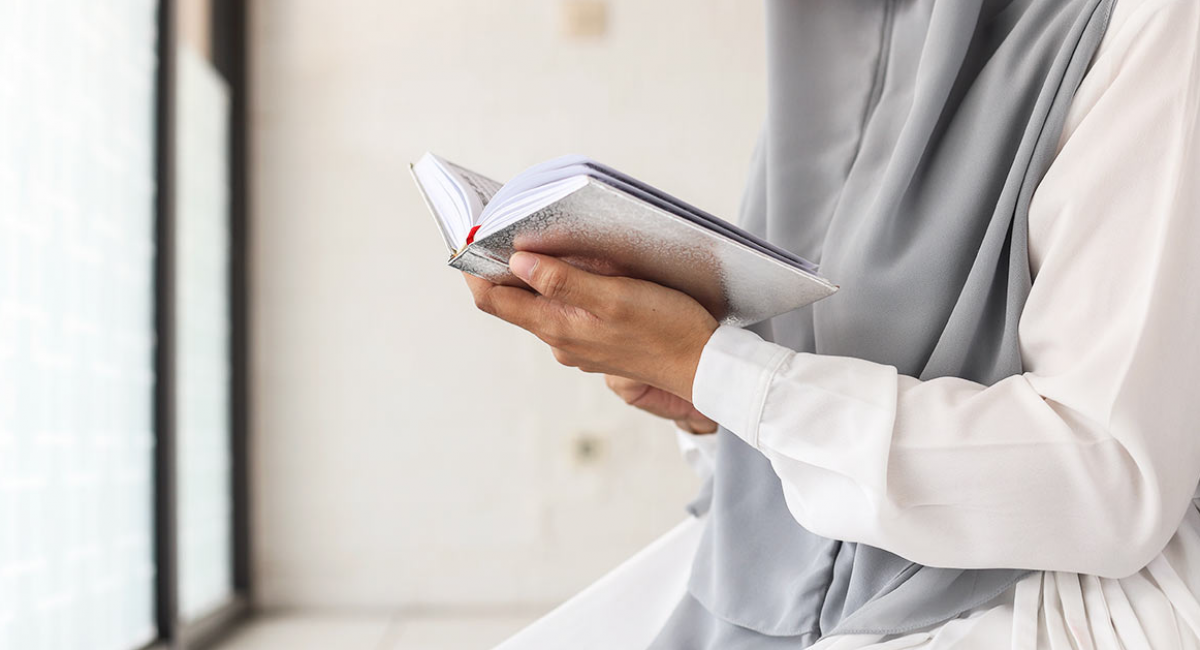
Assalamualaikum warahmatullah wabarakatuh. I would like to ask Ustadz, what is the ruling on a menstruating woman touching the Quran, Ustadz?
Answer :
Wa’alaykumus salam warahmatullah wabarakatuh.
Regarding this question, the majority of scholars strictly forbid a menstruating woman from touching the Mushaf(physical copy of the Quran) directly with her hands or her body. This is the opinion of the majority of scholars; even the 4 schools of thought (madzhab) have agreed upon this, although it is disputed by a small minority of scholars. This is alluded to by Al-Allamah Ibn Rushd Al-Hafid Al-Maliki:
مَسُّ الْجُنُبِ الْمُصْحَفَ، ذَهَبَ قَوْمٌ إِلَى إِجَازَتِهِ، وَذَهَبَ الْجُمْهُورُ إِلَى مَنْعِهِ، وَهُمُ الَّذِينَ مَنَعُوا أَنْ يَمَسَّهُ غَيْرُ مُتَوَضِّئٍ وَسَبَبُ اخْتِلَافِهِمْ هُوَ سَبَبُ اخْتِلَافِهِمْ فِي مَنْعِ غَيْرِ الْمُتَوَضِّئِ أَنْ يَمَسَّهُ. أَعْنِي قَوْله تَعَالَى: "لا يَمَسُّهُ إِلا الْمُطَهَّرُونَ" (الواقعة: 79) وَقَدْ ذَكَرْنَا سَبَبَ الِاخْتِلَافِ فِي الْآيَةِ فِيمَا تَقَدَّمَ، وَهُوَ بِعَيْنِهِ سَبَبُ اخْتِلَافِهِمْ فِي مَنْعِ الْحَائِضِ مَسَّه
“Touching the Mushaf for a person in a state of Junub (major ritual impurity): a group of scholars went towards permitting it, while the majority went towards forbidding it. They are the same ones who forbade the one without wudu(ablution) from touching it. The cause of their disagreement is the same as the cause of their disagreement regarding the prohibition of the one without wudu touching it. I mean the statement of Allah the Exalted: 'None touch it except the purified' (Al-Waqi’ah: 79). We have mentioned the cause of difference regarding the verse previously. This is exactly the cause of their difference regarding the prohibition of the menstruating woman touching it.” (Bidayah Al-Mujtahid, 1/55)
Imam Ibn Qudamah Al-Hanbali also asserted the same:
وَلَا يَمَسُّ الْمُصْحَفَ إلَّا طَاهِرٌ يَعْنِي طَاهِرًا مِنْ الْحَدَثَيْنِ جَمِيعًا. رُوِيَ هَذَا عَنْ ابْنِ عُمَرَ وَالْحَسَنِ وَعَطَاءٍ وَطَاوُسٍ وَالشَّعْبِيِّ وَالْقَاسِمِ بْنِ مُحَمَّدٍ وَهُوَ قَوْلُ مَالِكٍ وَالشَّافِعِيِّ وَأَصْحَابِ الرَّأْيِ، وَلَا نَعْلَمُ مُخَالِفًا لَهُمْ إلَّا دَاوُد فَإِنَّهُ أَبَاحَ مَسَّهُ
"And none touches the Mushaf except the pure (tahir), meaning pure from both states of impurity (minor and major). This is narrated from Ibn Umar, Al-Hasan, Atha, Tawus, Al-Sha’bi, Al-Qasim bin Muhammad, and it is the opinion of Malik, Al-Shafi’i, and the People of Opinion (Ashab al-Ra'y). We do not know of anyone opposing them except Dawud, for he permitted touching it (while in a state of impurity)." (Al-Mughni, 1/108)
Imam Ibn Al-Mundhir said after presenting the first opinion that forbids it and the second opinion that permits it:
وَالْأَكْثَرُ مِنْ أَهْلِ الْعِلْمِ عَلَى الْقَوْلِ الْأَوَّلِ
“The majority of the people of knowledge are upon the first opinion.” (Al-Awsat, 2/103)
Some scholars even cited the existence of a consensus (Ijma') regarding this. Imam Ibn Abdil Barr said:
وَأَجْمَعَ فُقَهَاءُ الْأَمْصَارِ الَّذِينَ تَدُورُ عَلَيْهِمُ الْفَتْوَى وَعَلَى أَصْحَابِهِمْ بِأَنَّ الْمُصْحَفَ لَا يَمَسُّهُ إِلَّا الطَّاهِرُ وَهُوَ قَوْلُ مَالِكٍ وَالشَّافِعِيِّ وَأَبِي حَنِيفَةَ وَأَصْحَابِهِمْ وَالثَّوْرِيِّ وَالْأَوْزَاعِيُّ وَأَحْمَدُ بْنُ حَنْبَلٍ وَإِسْحَاقُ بْنُ رَاهْوَيْهِ وَأَبِي ثَوْرٍ وَأَبِي عُبَيْدٍ وَهَؤُلَاءِ أَئِمَّةُ الرَّأْيِ وَالْحَدِيثِ فِي أَعْصَارِهِمْ
“The jurists of the various regions upon whom fatwa revolves, and their companions, have agreed that the Mushaf is not to be touched except by the pure (tahir). This is the opinion of Malik, Al-Shafi’i, Abu Hanifah and their companions, Al-Thawri, Al-Awza’i, Ahmad bin Hanbal, Ishaq bin Rahwayh, Abu Thaur, and Abu Ubaid. These are the Imams of Opinion and Hadith in their respective eras.” (Al-Istidhkar, 2/471)
The Opinion of the 4 Schools (Who Forbid)
This is the Hanafi school, as stated by Al-Imam Al-Sarakhsi Al-Hanafi:
وَمِنْهَا أَنَّهَا لَا تَمَسُّ الْمُصْحَفَ وَلَا اللَّوْحَ الْمَكْتُوبَ عَلَيْهِ آيَةً تَامَّةً مِنْ الْقُرْآنِ لِقَوْلِهِ تَعَالَى "لَا يَمَسُّهُ إلَّا الْمُطَهَّرُونَ"
“Among them (the prohibitions for menstruating women and those in postpartum) is that she does not touch the Mushafnor a tablet upon which is written a complete verse of the Quran, based on the saying of Allah Ta’ala: 'None touch it except the purified' (Al-Waqi’ah: 79).” (Al-Mabsut, 3/152)
It is also the relied-upon (mu'tamad) opinion in the Maliki school. Imam Al-Mawwaq Al-Maliki said:
يَمْنَعُ دَمُ الْحَيْضِ وَالنِّفَاسِ مِنْ دُخُولِ الْمَسْجِدِ وَالطَّوَافِ بِالْبَيْتِ وَالِاعْتِكَافِ وَذَلِكَ بِاتِّفَاقٍ، وَيَمْنَعُ مِنْ مَسِّ الْمُصْحَفِ وَفِي ذَلِكَ خِلَافٌ شَاذٌّ
“Menstrual blood and postpartum blood prevent entering the mosque, Tawaf around the House (Kaaba), and I'tikaf; this is by agreement. It also prevents touching the Mushaf, and in this matter, there is an anomalous (shadh) disagreement.” (Al-Taj wal-Iklil, 1/552)
And the agreed-upon opinion in the Shafi’i school. Imam An-Nawawi Al-Shafi’i said:
يَحْرُمُ عَلَى الْحَائِضِ وَالنُّفَسَاءِ مَسُّ الْمُصْحَفِ وَحَمْلُهُ وَاللُّبْثُ فِي الْمَسْجِدِ وَكُلُّ هَذَا مُتَّفَقٌ عَلَيْهِ عِنْدَنَا
“It is prohibited (haram) for the menstruating woman and the woman in postpartum to touch the Mushaf, to carry it, and to stay in the mosque. All of this is agreed upon according to us.” (Al-Majmu’ Sharh Al-Muhadhdhab, 2/358)
And the correct opinion held by the majority of scholars in the Hanbali school. Imam Al-Mardawi Al-Hanbali explained when discussing what is prohibited for one in a state of impurity:
وَأَمَّا مَسُّ الْمُصْحَفِ فَالصَّحِيحُ مِنْ الْمَذْهَبِ أَنَّهُ يَحْرُمُ مَسُّ كِتَابَتِهِ وَجِلْدِهِ وَحَوَاشِيهِ، لِشُمُولِ اسْمِ الْمُصْحَفِ لَهُ بِدَلِيلِ الْبَيْعِ وَلَوْ كَانَ الْمَسُّ بِصَدْرِهِ. وَعَلَيْهِ جَمَاهِيرُ الْأَصْحَابِ، وَقَطَعَ بِهِ كَثِيرٌ مِنْهُمْ
“As for touching the Mushaf, the correct view in the school (Hanbali) is that it is prohibited to touch its writing, its leather (cover), and its margins. Because the name ‘Mushaf’ encompasses it, evidenced by the sale (of the book). Even if the touching is with his chest. This is the view of the vast majority of the companions (of the school), and many of them asserted it definitively.” (Al-Insaf fi Ma’rifat al-Rajih, 1/223)
Evidences:
The statement of Allah Ta’ala:
إِنَّهُ لَقُرْآنٌ كَرِيمٌ (77) فِي كِتَابٍ مَكْنُونٍ (78) لَا يَمَسُّهُ إِلَّا الْمُطَهَّرُونَ (79)
“Indeed, it is a noble Qur'an. In a Register well-protected; None touch it except the purified.” (QS. Al-Waqi’ah: 77-79)
The meaning of “the purified” in the verse is those who are pure from hadath (ritual impurity) and najas (filth). This is based on the interpretation of the Companion Salman Al-Farisi regarding the verse. Abdurrahman bin Yazid narrated:
كُنَّا مَعَ سَلْمَانَ رَضِيَ اللَّهُ عَنْهُ، فَانْطَلَقَ إِلَى حَاجَةٍ فَتَوَارَى عَنَّا، ثُمَّ خَرَجَ إِلَيْنَا وَلَيْسَ بَيْنَنَا وَبَيْنَهُ مَاءٌ قَالَ: فَقُلْنَا لَهُ: "يَا أَبَا عَبْدِ اللَّهِ، لَوْ تَوَضَّأْتَ فَسَأَلْنَاكَ عَنْ أَشْيَاءَ مِنَ الْقُرْآنِ." قَالَ: فَقَالَ: "سَلُوا، فَإِنِّي لَسْتُ أَمَسُّهُ» فَقَالَ: " إِنَّمَا يَمَسُّهُ الْمُطَهَّرُونَ، ثُمَّ تَلَا "إِنَّهُ لَقُرْآنٌ كَرِيمٌ فِي كِتَابٍ مَكْنُونٍ لَا يَمَسُّهُ إِلَّا الْمُطَهَّرُونَ"
“We were with Salman (may Allah be pleased with him). He went to answer the call of nature and hid from us, then he came out to us and there was no water between us and him. We said to him: ‘O Abu Abdullah, if you were to perform ablution, we would ask you about things from the Quran.’ He replied: ‘Ask, for I am not touching it.’ Then he said: ‘Indeed, none touch it except the purified,’ then he recited: “Indeed, it is a noble Qur'an. In a Register well-protected; None touch it except the purified.” (QS. Al-Waqi’ah: 77-79)” (Narrated by Ibn Abi Shaybah in Al-Mushannaf: 1100)
The same was understood by the Companion Sa’ad bin Waqqas because he ordered his son to perform ablution before touching the Mushaf as narrated by Malik, saying, “This is a confirmed (thabit) narration.”(1) Also the opinion of the Companion Ibn Umar, “None should touch the Mushaf except the one who has performed ablution.” (Narrated by Ibn Al-Mundhir in Al-Awsat fis-Sunan: 629)
And the narration from the Prophet:
وَلَا يَمَسُّ الْقُرْآنَ إِلَّا طَاهِرٌ
“None touches the Quran except the pure.” (Narrated by Malik in Al-Muwatta’, 1/199)
Imam Ibn Abdil Barr said regarding this report of Amr bin Hazm:
وَكِتَابُ عَمْرِو بْنِ حَزْمٍ هَذَا قَدْ تَلَقَّاهُ الْعُلَمَاءُ بِالْقَبُولِ وَالْعَمَلِ وَهُوَ عِنْدَهُمْ أَشْهَرُ وَأَظْهَرُ مِنَ الْإِسْنَادِ الْوَاحِدِ الْمُتَّصِلِ
“This letter of Amr bin Hazm has been received by the scholars with acceptance and practice. It is, to them, more famous and clearer than a single connected chain of narration.” (Al-Istidhkar, 2/471)
Al-Hafiz Ibn Hajar Al-Asqalani quoted, “Al-Athram narrated that Imam Ahmad used this Hadith as a proof.”(2) Ishaq Al-Kawsaj narrated that Ishaq bin Rahwayh authenticated this Hadith.(3)
The Opinion that Permits It
This is the opinion of the Zahiris (Literalists) and an anomalous (shadh) opinion in the Maliki school as quoted by Ibn Rushd Al-Jadd.(4) This is what Imam Ash-Shawkani and As-San’ani inclined towards.(5) It was also preferred by Sheikh Al-Albani.(6) Imam Ibn Hazm Al-Andalusi Al-Zahiri said:
وَقِرَاءَةُ الْقُرْآنِ وَالسُّجُودُ فِيهِ وَمَسُّ الْمُصْحَفِ وَذِكْرُ اللَّهِ تَعَالَى جَائِزٌ، كُلُّ ذَلِكَ بِوُضُوءٍ وَبِغَيْرِ وُضُوءٍ وَلِلْجُنُبِ وَالْحَائِضِ
“Reading the Quran, prostrating during it, touching the Mushaf, and remembering Allah Ta’ala is permissible; all of that (is permissible) with ablution or without ablution, and for the Junub and the menstruating woman.” (Al-Muhalla bi Al-Athar, 1/94)
Evidences:
The saying of the Messenger of Allah:
إِنَّ المُسْلِمَ لاَ يَنْجُسُ
“Indeed, a Muslim does not become impure.” (Narrated by Al-Bukhari: 283, Muslim: 371 from Abu Hurairah)
The Mother of the Believers Aisha narrated:
قَالَ لِي رَسُولُ اللهِ صَلَّى اللهُ عَلَيْهِ وَسَلَّمَ: "نَاوِلِينِي الْخُمْرَةَ مِنَ الْمَسْجِدِ!"، قَالَتْ: فَقُلْتُ: "إِنِّي حَائِضٌ" فَقَالَ: "إِنَّ حَيْضَتَكِ لَيْسَتْ فِي يَدِكِ"
“The Messenger of Allah said to me: ‘Hand me the prayer mat (khumrah) from the mosque!’ She said: I replied: ‘I am menstruating.’ He said: ‘Indeed, your menses is not in your hand!’” (Narrated by Muslim: 298)
This indicates that what is impure on a menstruating woman is the blood and the place where the blood exits. Not her entire body. So there is no obstacle for her to hold the Mushaf with her hands. Because her menses is not in her hands.
As for the statement of Allah Ta’ala: “Indeed, it is a noble Qur'an. In a Register well-protected; None touch it except the purified.” (QS. Al-Waqi’ah: 77-79). According to this opinion, “the purified” are not those pure from minor or major impurity. Rather, it refers to the angels or those purified from sin like the angels and the prophets. This is the interpretation of Said bin Jubair, Mujahid bin Jabr, Ikrimah, Abu Al-‘Aliyah, Ibn Zaid, as quoted by Imam Ibn Jarir At-Tabari and chosen by him in his Tafsir.(7)
Also the interpretation of some of the Prophet’s Companions like Anas bin Malik and Ibn Abbas who said, “the purified”are the angels.(8) And the interpretation of Salman Al-Farisi in another narration regarding this verse:
وَهُوَ الذِّكْرُ الَّذِي فِي السَّمَاءِ لَا يَمَسُّهُ إِلَّا الْمَلَائِكَةُ
“It refers to the Adh-Dhikr (the Record) which is in the heaven. None touch it except the angels.” (Narrated by Abdur Razzaq in Al-Mushannaf: 1325 from Alqamah)
Conclusion
The most virtuous path is not to touch the Mushaf when not in a state of purity in order to escape the disagreement of the scholars, unless there is an urgent need. Although the evidence and reasoning of the scholars who permit it are also considered strong. Regardless of this disagreement, scholars agree on the prescription of purifying oneself before holding the Mushaf. The difference is that those who forbid touching the Mushaf obligate it, whereas those who permit touching the Mushaf only recommend it without making it obligatory. Wallahu a’lam
Some Exceptions
Even though the scholars of the 4 schools forbid menstruating women from touching the Mushaf directly, these scholars differ regarding touching the Mushaf in certain specific conditions.
Hanafi School
The Hanafi school forbids touching the Mushaf unless the Mushaf has a cover or jacket. Imam Al-Kasani Al-Hanafi said:
حُكْمُ الْحَيْضِ وَالنِّفَاسِ فَمَنْعُ جَوَازِ الصَّلَاةِ وَالصَّوْم، وَقِرَاءَةِ الْقُرْآنِ وَمَسِّ الْمُصْحَفِ إلَّا بِغِلَافٍ وَدُخُولِ الْمَسْجِدِ وَالطَّوَافِ بِالْبَيْتِ
“The ruling of menstruation and postpartum is the prevention of the permissibility of prayer, fasting, reading the Quran, touching the Mushaf unless with a cover, entering the mosque, and Tawaf around the House.” (Al-Badai’ As-Sanai’, 1/44)
However, the Hanafis differ regarding what kind of cover is permitted. The correct view according to the Hanafi school is a cover that is separate from the Mushaf or not part of the Mushaf or not attached to the leather (paper) on which the Quran is written. So touching the Quran with a barrier or obstruction like a cloth, handkerchief, and others is permissible according to this school. Imam Ibn Abidin Al-Hanafi said:
"إلَّا بِغِلَافِهِ الْمُنْفَصِلِ" أَيْ كَالْجِرَابِ وَالْخَرِيطَةِ دُونَ الْمُتَّصِلِ كَالْجِلْدِ الْمُشْرِزِ هُوَ الصَّحِيحُ وَعَلَيْهِ الْفَتْوَى
“‘Except with its separate cover’, meaning like a bag or a pouch, not the attached one like the bound leather. This is the correct view and upon it is the Fatwa.” (Ar-Radd Al-Mukhtar, 1/293).
It is also forbidden to touch the Quran using clothing that is currently being worn by the menstruating woman or the person in Junub. So if the clothing or cloth is not currently attached to the body, then it is permitted according to the Hanafi school. Imam Az-Zaila’i Al-Hanafi said:
وَلَا يَجُوزُ لَهُمْ مَسُّ الْمُصْحَفِ بِالثِّيَابِ الَّتِي يَلْبَسُونَهَا؛ لِأَنَّهَا بِمَنْزِلَةِ الْبَدَنِ
“It is not permissible for them to touch the Mushaf with the clothes they are wearing; because they (the clothes) have the status of the body.” (Tabyin Al-Haqaiq, 1/58)
There is another opinion in the Hanafi school, namely the permissibility of touching the cover that is directly attached to the Mushaf, and even the paper of the Mushaf as long as one does not touch the writing or letters of the Quran contained therein. This is quoted by Imam Ibn Nujaym Al-Hanafi:
وَقَالَ بَعْضُ مَشَايِخِنَا الْمُعْتَبَرُ حَقِيقَةُ الْمَكْتُوبِ حَتَّى إنْ مَسَّ الْجِلْدَ وَمَسَّ مَوَاضِعَ الْبَيَاضِ لَا يُكْرَهُ؛ لِأَنَّهُ لَمْ يَمَسَّ الْقُرْآنَ وَهَذَا أَقْرَبُ إلَى الْقِيَاسِ
“Some of our Sheikhs said: ‘What is considered is the reality of the written script, so even if he touches the leather (binding) and touches the white spaces (margins), it is not disliked; because he did not touch the Quran, and this is closer to analogy (Qiyas).’” (Al-Bahr Ar-Raiq, 1/211)
Similarly, according to another opinion in this school, it is permissible to touch the Mushaf even using clothing being worn, such as carrying the Mushaf in a pocket or the hem of the garment. This is the opinion of Imam Ibn Mazah Al-Hanafi who said, quoting the Hanafis of his time:
وَعَامَّتُهُمْ عَلَى أَنَّهُ لَا يُكْرَهُ لِأَنَّ الْمَحَرَّمَ هُوَ الْمَسُّ وَإِنَّهُ اسْمٌ لِلْمُبَاشَرَةِ بِالْيَدِ مِنْ غَيْرِ حَائِلٍ
“And the generality of them are upon (the view) that it is not disliked, because what is prohibited is touching, and that is a name for direct contact with the hand without a barrier.” (Al-Muhit Al-Burhani, 1/216).
However, this opinion was refuted by Imam Ibn Nujaym Al-Hanafi by saying:
وَفِي الْهِدَايَةِ وَيُكْرَهُ مَسُّهُ بِالْكُمِّ هُوَ الصَّحِيحُ؛ لِأَنَّهُ تَابِعٌ لَهُ وَفِي الْخُلَاصَةِ مِنْ فَصْلِ الْقُرْآنِ وَكَرِهَهُ عَامَّةُ مَشَايِخِنَا فَهُوَ مُعَارِضٌ لِمَا فِي الْمُحِيطِ فَكَانَ هُوَ الْأَوْلَى وَفِي فَتْحِ الْقَدِيرِ وَالْمُرَادُ بِالْكَرَاهَةِ كَرَاهَةُ التَّحْرِيمِ وَلِهَذَا عَبَّرَ بِنَفْيِ الْجَوَازِ فِي الْفَتَاوَى
“In Al-Hidayah: ‘And it is disliked to touch it with the sleeve,’ this is the correct view; because it (the sleeve) is subordinate to him. And in Al-Khulasah in the chapter of the Quran: ‘The generality of our Sheikhs disliked it.’ This contradicts what is in Al-Muhit and that (the prohibition) is more appropriate. In Fathul Qadir, it is mentioned that the dislike meant is Makruh Tahrim (prohibitive dislike/forbidden). For this reason, he expressed it by negating permissibility in Al-Fatawa.” (Al-Bahr Ar-Raiq, 1/212)
If touching with a barrier that is not part of the Mushaf is permitted, then naturally carrying the Mushaf inside a bag or any medium is even more permissible. This is the conclusion of the opinion of this school.
Hanbali School
Similarly, the correct opinion in the Hanbali school is almost the same as the Hanafi school, which allows touching the Mushaf if touched indirectly, i.e., with a barrier, its cover, its wrapper, or with other objects. Except that the Hanbali school is lighter, namely allowing touching the Quran with clothing being worn or a pocket without exception, as long as one does not touch it directly.
Imam Ibn Muflih Al-Hanbali said:
وَيَجُوزُ حَمْلُهُ بِعِلَاقَتِهِ أَوْ فِي غِلَافِهِ أَوْ كَمِّهِ وَتَصَفُّحُهُ بِهِ وَبِعَوْدٍ وَمَسُّهُ مِنْ وَرَاءِ حَائِلٍ "وهـ" كَحَمْلِهِ رُقًى وَتَعَاوِيذَ فِيهَا قُرْآنٌ "و" وَلِأَنَّ غِلَافَهُ لَيْسَ بِمُصْحَفٍ
“It is permissible to carry it by its strap, or in its cover, or (with) his sleeve, and to turn its pages with it (the sleeve) or with a stick, and to touch it from behind a barrier. Like carrying Ruqyah and amulets containing Quran. And because its cover is not a Mushaf.” (Al-Furu’ wa Tashih Al-Furu’, 1/242)
There is also another opinion in the Hanbali school, which is the opinion chosen by Ibn Aqil Al-Hanbali in Al-Funun, namely the permissibility of touching the paper of the Mushaf as long as one does not touch the writing of the Quran,(9) exactly like the opinion of some Hanafi scholars discussed earlier. There is also a narration of an opinion from Imam Ahmad forbidding touching the Quran with clothing being worn or a pocket as quoted by Ibn Qudamah,(10) exactly like the correct opinion in the Hanafi school. Like the Hanafi school, if touching the Mushaf with a barrier is permitted, surely carrying the Mushaf in a bag or any medium is even more permissible. This is the conclusion of the opinion of this school. Wallahu a’lam
Maliki School
The Maliki school forbids touching or carrying the Mushaf for a menstruating woman absolutely. Whether touching with a barrier or not. Imam Malik said:
وَلَا يَحْمِلُ أَحَدٌ الْمُصْحَفَ بِعِلَاقَتِهِ وَلَا عَلَى وِسَادَةٍ إِلَّا وَهُوَ طَاهِرٌ، وَلَوْ جَازَ ذَلِكَ لَحُمِلَ فِي خَبِيئَتِهِ وَلَمْ يُكْرَهْ ذَلِكَ، لِأَنْ يَكُونَ فِي يَدَيِ الَّذِي يَحْمِلُهُ شَيْءٌ يُدَنِّسُ بِهِ الْمُصْحَفَ. وَلَكِنْ إِنَّمَا كُرِهَ ذَلِكَ لِمَنْ يَحْمِلُهُ وَهُوَ غَيْرُ طَاهِرٍ، إِكْرَامًا لِلْقُرْآنِ وَتَعْظِيمًا لَهُ
“No one should carry the Mushaf by its strap nor on a pillow unless he is pure. If that were permitted, it would be carried in his pocket/pouch without being disliked, because there might be something on the hands of the one carrying it that could soil the Mushaf. But indeed, that is disliked for the one who carries it while not pure, out of honor for the Quran and exaltation of it.” Yahya bin Bukair (narrator of Al-Muwatta’) said: “However, Malik actually disliked a person who is not pure carrying the Mushaf purely to honor and exalt the Quran.” (Al-Muwatta’ 1/199)
Imam Al-Baji Al-Maliki explained the meaning of Imam Malik’s statement above:
وَالدَّلِيلُ عَلَى مَا نَقُولُهُ أَنَّ هَذَا مُحْدِثٌ فَلَمْ يَجُزْ لَهُ ذَلِكَ كَمَا لَوْ بَاشَرَهُ بِالْحَمْلِ
“The evidence for what we say is that this person is in a state of hadath (impurity), so it is not permissible for him (to do that) just as if he engaged in carrying it directly.” (Al-Muntaqa, 1/343)
Here it appears that Imam Malik did not permit it not because of whether the person in Junub or menstruation is impure or not. But solely to exalt the Quran. Because, it is not fitting for a person who is not pure to carry the book that is most pure. It is tantamount to an act of disrespect towards the Quran which was sent down with purity and is not touched except by the purest of creatures, the angels. So the parameter here is the purpose or motive of the person in impurity towards the Mushaf, not whether the Mushaf is touched directly or not.
Al-Imam Ibn Abdil Barr Al-Maliki commented on Imam Malik’s statement above:
وَلَا بَأْسَ أَنْ يَحْمِلَهُ فِي التَّابُوتِ (وَالْخُرْجِ) وَالْغِرَارَةِ مَنْ لَيْسَ عَلَى وُضُوءٍ قَالَ وَذَلِكَ أَنَّ اللَّهَ عَزَّ وَجَلَّ يَقُولُ لَا يَمَسُّهُ إِلَّا الْمُطَهَّرُونَ قَالَ وَهَذَا قَوْلُ مَالِكٍ وَأَبِي عَبْدِ اللَّهِ يَعْنِي الشَّافِعِيَّ رَحِمَهُ اللَّهُ قَالَ أَبُو عُمَرَ إِنَّمَا رَخَّصَ مَالِكٌ فِي حَمْلِ غَيْرِ الْمُتَوَضِّئِ لِلْمُصْحَفِ فِي التَّابُوتِ وَالْغِرَارَةِ لِأَنَّ الْقَصْدَ لَمْ يَكُنْ مِنْهُ إِلَى حَمْلِ الْمُصْحَفِ وَإِنَّمَا قُصِدَ إِلَى حَمْلِ التَّابُوتِ وَمَا فِيهِ مِنْ مُصْحَفٍ وَغَيْرِهِ
“There is no harm for one who is not in a state of wudu to carry it in a box (for storing goods) and a saddlebag and a large sack. He said: That is because Allah Azza wa Jalla says: ‘None touch it except the purified.’ He said: This is the opinion of Malik and Abu Abdullah, meaning Al-Shafi’i, may Allah have mercy on him. Abu Umar (Ibn Abdil Barr) said: Malik only granted concession for the one without wudu to carry the Mushaf in a box and sack because the intention was not to carry the Mushaf, rather the intention was to carry the box and whatever is inside it, whether Mushaf or other things.” (At-Tamhid, 17/398)
Imam Al-Kharashi Al-Maliki added:
أَمَّا لَوْ قُصِدَ الْمُصْحَفُ فَقَطْ بِالْحَمْلِ أَوْ مَعَ الْأَمْتِعَةِ فَيُمْنَعُ حَمْلُهُ حِينَئِذٍ
“However, if the intention is solely the Mushaf in carrying, or (even) along with goods, then carrying it is prevented at that time.” (Sharh Mukhtasar Al-Khalil, 1/161)
Sheikh Ad-Dardir Al-Maliki stated explicitly:
(وَمَنَعَ الْحَدَثُ صَلَاةً وَطَوَافًا وَمَسَّ مُصْحَفٍ أَوْ جُزْئِهِ وَكَتْبَهُ وَحَمْلَهُ وَإِنْ بِعَلَّاقَةٍ أَوْ ثَوْبٍ) يَعْنِي أَنَّ الْحَدَثَ الْأَصْغَرَ - وَأَوْلَى الْأَكْبَرُ - يَمْنَعُ التَّلَبُّسَ بِالصَّلَاةِ وَالطَّوَافِ. إذْ مِنْ شَرْطِ صِحَّتِهِمَا الطَّهَارَةُ فَلَا يَنْعَقِدَانِ بِدُونِهَا. وَيَمْنَعُ أَيْضًا مَسَّ الْمُصْحَفِ الْكَامِلِ أَوْ جُزْءٍ مِنْهُ - وَإِنْ آيَةً - وَلَوْ مَسَّ ذَلِكَ مِنْ فَوْقِ حَائِلٍ أَوْ بِعُودٍ. وَكَذَا يَحْرُمُ عَلَى الْمُحْدِثِ كَتْبُهُ، فَلَا يَجُوزُ لِلْمُحْدِثِ أَنْ يَكْتُبَ الْقُرْآنَ أَوْ آيَةً مِنْهُ، وَلَا أَنْ يَحْمِلَهُ - وَلَوْ مَعَ أَمْتِعَةٍ غَيْرِ مَقْصُودَةٍ بِالْحَمْلِ، وَلَوْ بِعَلَّاقَةٍ أَوْ ثَوْبٍ أَوْ وِسَادَةٍ
“(Impurity (hadath) prevents prayer, Tawaf, touching the Mushaf or a part of it, writing it, and carrying it even with a strap or cloth)” meaning that minor impurity—and certainly major impurity is more worthy—prevents engaging in prayer and Tawaf. Since purity is a condition for their validity, they are not established without it. It also prevents touching the complete Mushaf or a part of it—even a verse—even if he touches that from over a barrier or with a stick. Similarly, it is forbidden for the one in impurity to write it, so it is not permissible for the one in impurity to write the Quran or a verse from it, nor to carry it—even if with goods not intended to be carried (specifically), and even if with a strap or cloth or pillow.” (Bulghah As-Salik, 1/150)
Nevertheless, there is an exception in the Maliki school, which is the permissibility of a menstruating woman touching the Mushaf if her purpose is to teach or learn, specifically Quranic learning(11). This is alluded to by Ibn Al-Arabi Al-Maliki:
وَقَدْ أُبِيحَ مَسُّ الْقُرْآنُ بِغَيْرِ طَهَارَةٍ ضَرُورَةَ التَّعَلُّمِ ، وَهَلْ أُبِيحَ ذَلِكَ ضَرُورَةً لِلْمُعَلِّمِ ؟ فَرَوَى ابنُ الْقَاسِمِ عَنْ مَالِكٍ إِبَاحَتَهُ، وَكَرَهَ ابْنُ حَبِيبٍ ذَلِكَ فَوَجْهُ رِوَايَةِ ابْنِ الْقَاسِمِ أَنَّ الْمُعَلِّمَ يَحْتَاجُ مِنْ تَكَرُّرِ مَسِّهِ مَا تُلْحِقُهُ الْمَشَقَّةُ بِاسْتِدَامَةِ الطَّهَارَةِ لَهُ ، فأَرْخَصَ لَهُ فِي ذَلِكَ كَالْمُتَعَلِّمِ وَوَجْهُ رِوَايَةِ ابْنِ حَبِيبٍ أَنَّهُ غَيْرُ مُحْتَاجٍ إِلَى مَسِّهِ لِمَعْنَى التَّعَلُّمِ لِأَنَّهُ حَافِظٌ
“And touching the Quran without purity has been permitted due to the necessity of learning. Is that also permitted as a necessity for the teacher? Ibn Al-Qasim narrated from Malik its permissibility, while Ibn Habib disliked that. The basis of Ibn Al-Qasim’s narration is that the teacher needs to touch it repeatedly, which would cause hardship if he were to sustain purity for it, so concession was granted to him in that just like the learner. While the basis of Ibn Habib’s narration is that he does not need to touch it for the meaning of learning because he has memorized it.” (Al-Masalik fi Sharh Muwatta’ Malik, 3/366)
Imam Ad-Dasuqi Al-Maliki explained the statement of Ad-Dardir Al-Maliki when explaining the prohibition for menstruating women:
(قَوْلُهُ: وَمَسُّ مُصْحَفٍ) أَيْ مَا لَمْ تَكُنْ مُعَلِّمَةً أَوْ مُتَعَلِّمَةً وَإِلَّا جَازَ مَسُّهَا لَهُ
“(His saying: and touching the Mushaf), meaning as long as she is not a teacher or a learner. If not (meaning if she is), then it is permissible for her to touch it.” (Hashiyah Ad-Dasuqi ‘ala Sharh Al-Kabir, 1/174)
Shafi’i School
We leave the Shafi’i school for last, because this school is the strictest in this issue. The Shafi’i scholars agree on the prohibition of touching the Mushaf for a menstruating woman or one in Junub without exception. Almost the same as the Malikis, specifically it is absolutely forbidden to touch or carry the Mushaf whether with a barrier or not. Imam An-Nawawi Al-Shafi’i said:
يَحْرُمُ عَلَى الْحَائِضِ وَالنُّفَسَاءِ مَسُّ الْمُصْحَفِ وَحَمْلُهُ وَاللُّبْثُ فِي الْمَسْجِدِ وَكُلُّ هَذَا مُتَّفَقٌ عَلَيْهِ عِنْدَنَا وَتَقَدَّمَتْ أَدِلَّتُهُ وَفُرُوعُهُ الْكَثِيرَةُ مَبْسُوطَةً فِي بَابِ مَا يُوجِبُ الْغُسْلَ
“It is prohibited for the menstruating woman and the woman in postpartum to touch the Mushaf, to carry it, and to stay in the mosque. All of this is agreed upon according to us, and its evidences and its many branches have been detailed previously in the chapter of what necessitates Ghusl (bath).” (Al-Majmu’ Sharh Al-Muhadhdhab, 2/358)
Imam An-Nawawi said when summarizing Imam Ar-Rafi’i Al-Shafi’i’s exposition on hadath:
يَحْرُمُ عَلَى الْمُحْدِثِ جَمِيعُ أَنْوَاعِ الصَّلَاةِ وَالسُّجُودِ وَالطَّوَافِ وَمَسِّ الْمُصْحَفِ وَحَمْلِهِ، وَيَحْرُمُ مَسُّ حَاشِيَةِ الْمُصْحَفِ وَمَا بَيْنَ سُطُورِهِ وَحَمْلِهِ بِالْعَلَاقَةِ قَطْعًا، وَيَحْرُمُ مَسُّ الْجِلْدِ عَلَى الصَّحِيحِ، وَالْغِلَافِ وَالصُّنْدُوقِ وَالْخَرِيطَةِ إِذَا كَانَ فِيهِنَّ الْمُصْحَفُ عَلَى الْأَصَحِّ، وَلَوْ قَلَّبَ أَوْرَاقَهُ بِعُودٍ، حَرُمَ عَلَى الْأَصَحِّ، قُلْتُ: قَطَعَ الْعِرَاقِيُّونَ بِالْجَوَازِ وَهُوَ: الرَّاجِحُ، فَإِنَّهُ غَيْرُ حَامِلٍ وَلَا مَاسٍّ، وَلَوْ لَفَّ كُمَّهُ عَلَى يَدِهِ وَقَلَّبَ بِهِ الْوَرَقَ، حَرُمَ عِنْدَ الْجُمْهُورِ وَهُوَ الصَّوَابُـ وَقِيلَ: وَجْهَانِ وَاللَّهُ أَعْلَمُ، وَلَا يَحْرُمُ حَمْلُ الْمُصْحَفِ فِي جُمْلَةِ مَتَاعٍ عَلَى الْأَصَحِّ
“It is prohibited for the one in hadath (to perform) all types of prayer, prostration, Tawaf, touching the Mushaf, and carrying it. It is prohibited to touch the margin of the Mushaf and what is between its lines, and carrying it by the strap definitively. It is prohibited to touch the leather (binding) according to the correct view, and the cover, the box, and the pouch if the Mushaf is in them according to the most correct view. If he turns its pages with a stick, it is prohibited according to the most correct view. I (An-Nawawi) say: ‘The Iraqis (Shafi'i scholars of Iraq) asserted permissible definitively, and that is the preferred view (Rajih), because he is neither carrying nor touching.’ If he wraps his sleeve over his hand and turns the paper with it, it is prohibited according to the majority, and that is the correct view. It is said: there are two views. Allah knows best. And it is not prohibited to carry the Mushaf among a group of goods according to the most correct view.” (Rawdat At-Talibin, 1/79-80)
Here it appears there is no exception at all other than turning the pages of the Mushaf with a stick or cane. Even that is still disputed, because Imam An-Nawawi permitted it, while Imam Ar-Rafi’i prohibited it. The Shafi’i school is the same as the Maliki school in this regard, which is making the purpose and motive of carrying the Mushaf the parameter of prohibition, not whether the Mushaf is touched directly or not. Imam Abu Zur’ah Al-Iraqi Al-Shafi’i said:
فَالْأَصَحُّ جَوَازُ حَمْلِهِ فِي أَمْتِعَةٍ كَمَا صَرَّحَ بِهِ فِي "اْلمِنْهَاجِ" وَ"الْحَاوِي" ، لَكِنَّ شَرَطَهُ أَلَّا يَكُونَ مَقْصُوداً بِالْحَمْلِ كَمَا صَرَّحَ بِهِ الرَّافِعِيُّ وَغَيْرُهُ ، وَحَذَفَهُ فِي "الرَّوْضَةِ" ، وَعِبَارَةُ سَلِيمٍ فِي "اْلمُجَرَّدِ": شَرَطَهُ أَنْ يُقْصَدَ نَقْلُ الْمَتَاعِ لَا غَيْرَ. انْتَهَى وَمُقْتَضَاهَا أَنَّهُ إِذَا قَصَدَ الْمُصْحَفَ وَغَيْرَهُ .. حَرُمَ
“The most correct view is the permissibility of carrying it among goods as stated explicitly in Al-Minhaj and Al-Hawi. But its condition is that he does not intend to carry it (the Mushaf) as stated explicitly by Ar-Rafi’i and others. However, he (An-Nawawi) omitted it in Ar-Rawdah. The phrase of Salim in Al-Mujarrad: ‘Its condition is that he intends to move the goods, nothing else.’ End quote. Its implication is that if he intends (carrying) the Mushaf and others... it is prohibited.” (Tahrir Al-Fatawa, 1/91-92)
The reason is as mentioned by Sheikh al-Islam Zakariya Al-Ansari Al-Shafi’i, “Because carrying the Mushaf of the Quran is more severe than merely touching it.”(12) So the Shafi’is agree with the Malikis in the prohibition of carrying the Mushaf even with a barrier, even with a box, wrapper, or a table supporting the Mushaf; it remains prohibited. Included in this is the prohibition of a menstruating woman carrying the Mushaf in her bag or wallet. The difference is only in the issue of the menstruating woman who is learning and the female teacher who is menstruating, where the Maliki school makes an exception for them and permits it, whereas the Shafi’is do not give any exception whatsoever. Wallahu a’lam
Summary
Only the Zahiri opinion permits a menstruating woman to touch the Mushaf absolutely and to carry it. The Malikis only permit touching and carrying the Mushaf for a menstruating woman if it is for the interest of learning and teaching. Other than that, it is not permitted. This opinion is suitable for female students or Quran memorizers. The Hanafis and Hanbalis permit touching the Quranic Mushaf and carrying it with a base or barrier. However, the Hanafis require that the barrier must not be a base attached to the person’s body or a base attached directly to the Mushaf, whereas the Hanbalis do not set such conditions at all. The Malikis and Shafi’is do not permit touching and carrying the Mushafabsolutely. It is only that the Malikis permit it for a menstruating woman engaged in learning or teaching activities, as above. Meanwhile, the Shafi’is do not permit touching and carrying the Mushaf absolutely in any way other than turning the Mushaf paper using a stick or cane, if following the opinion preferred by An-Nawawi, not Ar-Rafi’i. The Zahiri School is the lightest opinion in this issue, but their opinion contradicts the agreement of the 4 schools which forbid touching the Mushaf directly.
Among the four schools (which forbid touching the Mushaf directly), the Hanbali school is the loosest school in this regard and the Shafi’i school is the strictest school in this issue. The Maliki school is in the middle in this matter. Wallahu a’lam
Conclusion
In reality, the difference regarding this exception is a considered (muktabar) matter among the scholars. Because indeed there is no evidence that exclusively gives an exception. All of it is purely the result of Ijtihad and legal deduction (Istinbat) which is not devoid of the approach of analogy (Qiyas), linguistic approach, etiquette (Adab) approach, as well as the approach of hardship (Masyaqqah) and concession (Rukhshah). So whichever opinion is chosen is basically not a problem, although generally the people of Indonesia follow the Shafi’i school which is considered very strict in this issue.
If following the Shafi’i school, then female students may not carry the Mushaf in any form when menstruating, even by using her bag or suitcase and may not carry it at all even with a mat, table, or any medium, unless it is accompanied by other goods and it must be intended not to carry the Mushaf at all. As for the author, I lean towards the view of the Hanafis and Hanbalis in this matter, namely the permissibility of a menstruating woman touching the Mushaf as long as it is with a base or barrier or not touching it directly. Certainly, the most virtuous is a base or barrier that is not directly attached to the Mushaf or not attached to the woman’s body to exit from the dispute between the Hanafis and the Hanbalis. Specifically, the author chooses the view of the permissibility of touching the Mushaf even using clothes or Jilbab currently being worn by the menstruating woman if she wishes to touch it, and this is in accordance with the opinion of the Hanbali school specifically. Wallahu ‘alam bis shawab
Sumber Referensi:-
Al-Muwatta’ 1/42
-
Al-Talkhis al-Habir 1/361
-
Masa’il Imam Ahmad wa Ishaq bin Rahwayh 2/345
-
Al-Muqaddimat wa al-Mumahhidat 1/135
-
Nayl al-Awtar 1/261 and As-San’ani in Subul al-Salam 1/101
-
Tamam al-Minnah 1/116
-
Jami’ al-Bayan 33/150-152
-
Al-Bayhaqi in Ma’rifat al-Sunan wa al-Athar 1/320
-
As cited by Al-Mardawi in Al-Insaf 1/223
-
Al-Mughni 1/109
-
Among what is permitted by the Maliki school is [using it] for the purpose of Ruqyah or treatment for the evil eye (‘ayn), magic (sihr), or Jinn disturbance.
-
Fath al-Wahhab 1/11
 ?>)
 ?>)