 By
By 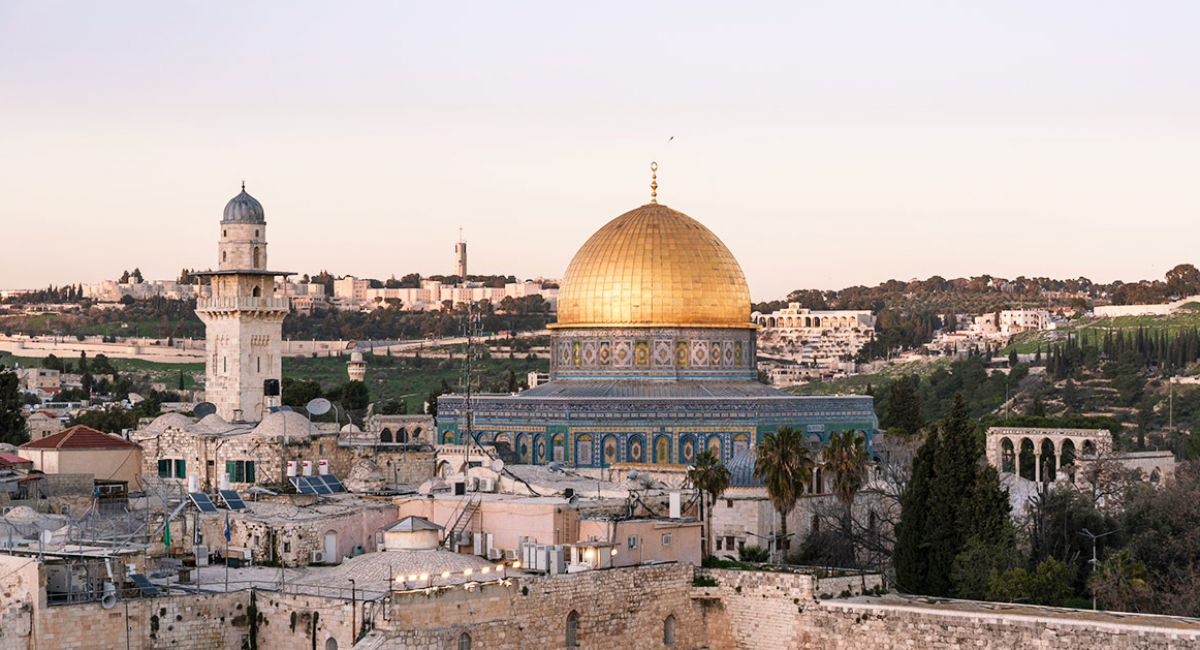
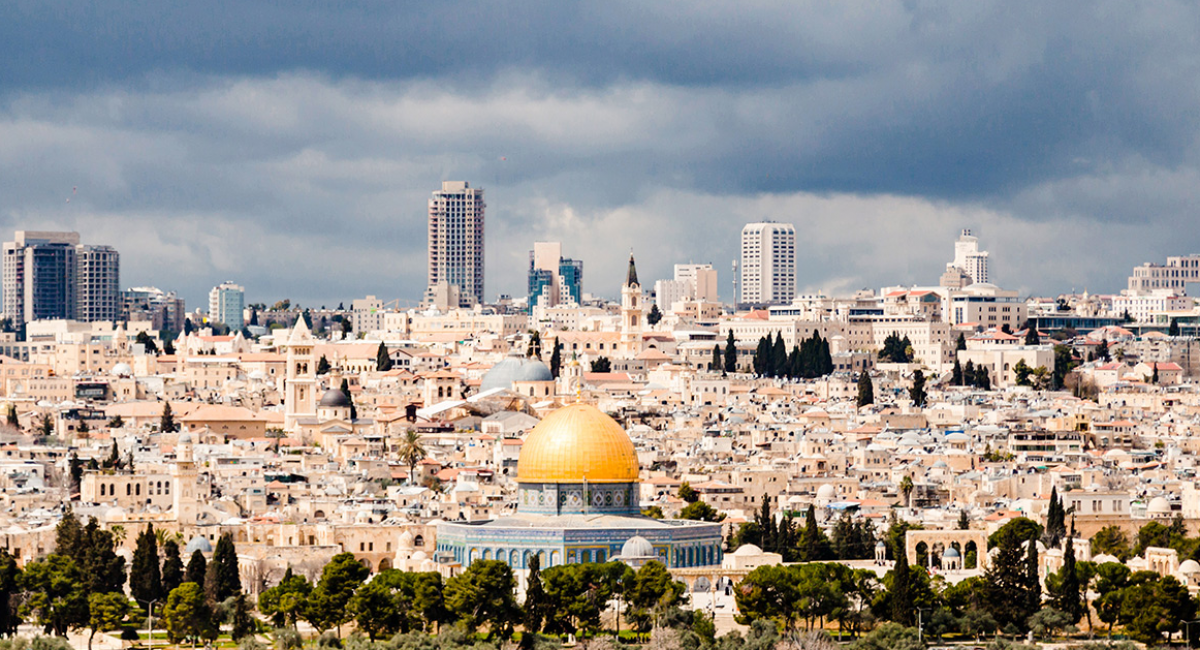
The Qur'an does not speak about "the holy land" except once. The Qur'an also does not describe the Grand Mosque (Masjid Al-Haram) or the Ka'bah with "holiness" even though it mentions them several times. This holiness is precisely what Allah attributes to Baitul Maqdis or Al-Aqsa Mosque. This does not negate the sanctity of the House of Allah (Baitullah), but this is how Allah has given special status to Baitul Maqdis. Allah says, quoting the words of Prophet Moses,
"O my people, enter the land al-muqaddasah (the holy) which Allah has ordained for you and do not turn back on your heels, so that you become losers." (Al-Maidah: 21)
Language scholars interpreted the land al-muqaddasah as Baitul Maqdis, as affirmed by Ibn An-Nahhas, Raghib Al-Ashfahani, and Az-Zamakhsyari. [1] This is the view favored by Ibn Kathir. [2] Muhammad Abu Zahrah mentioned that this is the opinion of the majority of scholars. [3] The meaning of al-muqaddasah is purified, as affirmed by Az-Zajjaj and Abu Ubaidah Al-Bashri from among the language scholars, and chosen by At-Tabari. [4] However, At-Tabari added "the blessed land" following and combining it with the interpretation of Qatadah, so the meaning of al-muqaddasahaccording to Ibn Jarir At-Tabari is the land that is purified and blessed. [5]
Imam Ibn An-Nahhas said,
"it means Baitul Maqdis. Al-Muqaddasah is an adjective for that land, meaning purified from many sins due to the abundance of prophets there." (I'rab Al-Quran 1/263)
Imam Al-Wahidi added,
"that land was purified from much polytheism and was made a dwelling and residence for the prophets." (Al-Basith, 7/323)
So the holiness intended is that Baitul Maqdis is sanctified and purified from various sins and polytheism. Imam Abu Al-Laith As-Samarqandi said, "al-muqaddasah linguistically is a place used for purification. Thus its meaning is a house used by humans to purify themselves from sin." (Bahr Al-‘Ulum, 1/381)
Despite this, some scholars interpreted it more broadly and generally. Such as Mujahid bin Jabr who interpreted the land al-muqaddasah as the Thur (Sinai) region and its surroundings, while Qatadah bin Di'amah interpreted it as the entire region of Syam (Greater Syria). Ibn Zaid, and As-Sudi, as well as one narration of tafsir from Ibn Abbas - through the route of Ikrimah - interpreted it as the area of Ariha (Jericho). [6] Qutaibah bin Sa'ad interpreted the land al-muqaddasahas the region of Damascus, Palestine, and parts of Jordan. [7] Specifically for the Ariha area, Ibn Kathir explained that the Ariha intended is Ariha of Baitul Maqdis, not the Ariha region famous today which is located towards the edge of the valley in the eastern region of Baitul Maqdis. [8]
However, Ibn Jarir At-Tabari precisely asserted - after quoting several interpretations from the salaf - "what is meant by the land al-muqaddasah does not leave the area or land located between the Euphrates river and the Arish (river) in Egypt, based on the agreement of the mufassirin (interpreters) and historians who informed about it." [9] What At-Tabari conveyed is consistent with the information in the Jewish Torah today concerning the promised land given to Abraham (Prophet Ibrahim), "On that day the LORD made a covenant with Abram and said, 'To your descendants I give this land, from the river of Egypt to the great river, the Euphrates.'" (Book of Genesis 15:18)
Of course, Prophet Ismail is included in the descendants of Prophet Ibrahim, and he is even the first son of Prophet Ibrahim and older than Prophet Isaac. Whatever and however the interpretations are from the salaf, Baitul Maqdis is still included in it. Because Baitul Maqdis is still within the scope of the vicinity of Thur Sina if following the interpretation of Imam Mujahid, it is included in the region of Syam if following the interpretation of Imam Qatadah, it includes the region of Palestine following the interpretation of Imam Ibn Qutaibah, it encompasses Ariha following the interpretation of Imam Ibn Zaid, it is part of the area located between the Euphrates river and the Arish river in Egypt if following the interpretation of Imam At-Tabari, and it is the land al-Muqaddasah itself according to the interpretation of Arab language experts and the majority of mufassirin.
Sumber Referensi:-
Ibn An-Nahhas in I’rab Al-Quran 1/263, Raghib Al-Ashfahani in his Tafsir 4/313, and Az-Zamakhsyari in Al-Kassyaf1/620
-
Ibn Kathir in Tafsir Al-Quran Al-‘Adzhim 3/75
-
Mustafa Abu Zahrah in Zahrah At-Tafasir 4/2111
-
Az-Zajjaj in Ma’an Al-Quran 2/162, Abu Ubaidah Al-Bashri 1/160, At-Tabari in Jami’ Al-Bayan 1/475.
-
At-Tabari in Jami’ Al-Bayan 10/168
-
These three interpretations originate from the tabi’in and sahabah (companions) and are narrated by At-Tabari in Jami’ Al-Bayan 10/167-168
-
Gharib Al-Quran 1/124
-
Tafsir Al-Quran Al-‘Adzhim 3/75
-
Jami’ Al-Bayan 10/167-168
 ?>)
 ?>)