 By
By 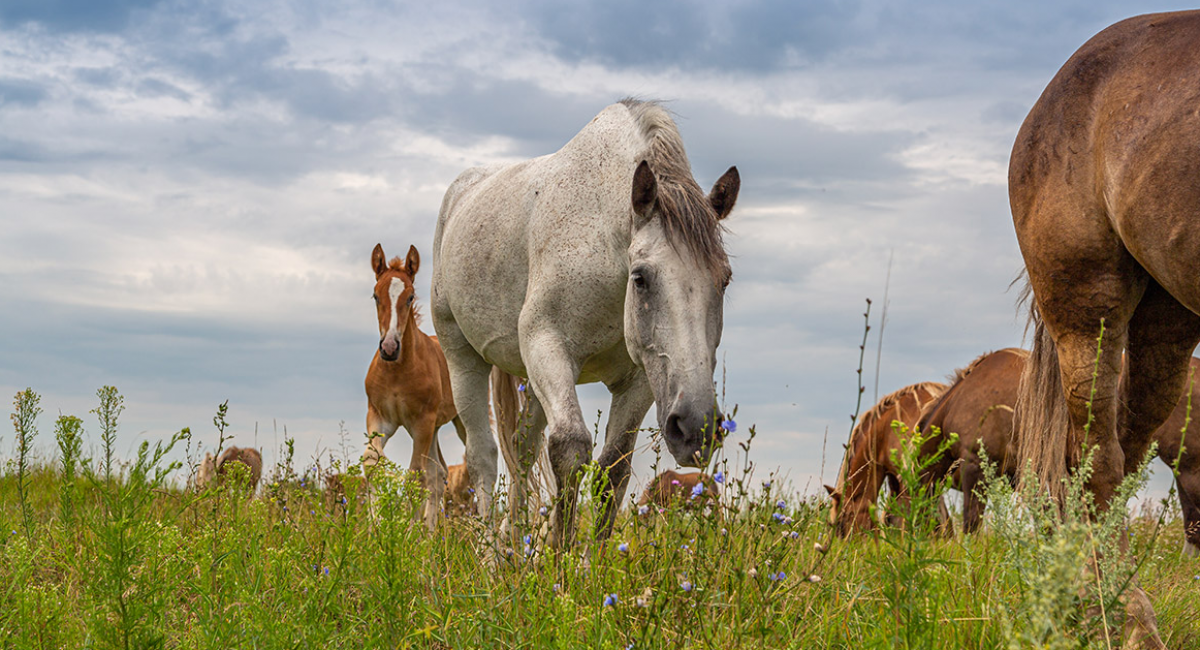
The eating of horse meat is one of the traditions practiced in some areas of Indonesia. Undeniably, horses are generally used as transportation for humans. They are even among the animals that are very often utilized by humans, especially Muslims. Allah mentions horses several times in relation to them as mounts and their connection to the world of Jihad(warfare). Moreover, the horse is a symbol of valor for men in the world of battle. So, what about eating horse meat? What is the ruling of the Sharia regarding this matter? The scholars have different explanations regarding it.
Declaring it Forbidden
Eating horse meat is forbidden (haram). This is one of the opinions of Abu Hanifah as interpreted by some Hanafis and authenticated by the earlier Hanafi scholars (mutaqaddimin), as well as the famous opinion in the Maliki school. This is also the opinion of Al-Awza’i[1]. Although, in reality, this is still disputed within the Hanafi and Maliki schools. This is alluded to by Abu Hafs Al-Hanafi from the Hanafis who quoted,
“Eating horse meat is disliked (makruh) according to Abu Hanifah – may Allah be pleased with him –, but the mashayikh (Hanafi scholars) differ on whether it is reprehensible dislike (karahiyah tanzih) (closer to permissible) or prohibitive dislike (karahiyah tahrim) (closer to forbidden).” (Al-Ghurratul Manfiyyah I/174) Al-Hattab from the Malikis quoted,
“As for horses, they (Maliki scholars) mentioned 3 opinions here (in the Maliki school), namely prohibition (man’a / haram), disliked (karahah), and permissible (ibahah).” (Mawahibul Jalil III/235) Ibn Qasim Al-Maliki narrated[2] that Malik said horse meat is not eaten. Al-Baji Al-Maliki attributed to Malik that he disliked it, while Ibn Habib narrated that Malik allowed it, as mentioned by Mawwaq Al-Maliki.[3]
Those from the Hanafis Who Forbid It
Al-Quduri Al-Hanafi affirmed,
“Abu Hanifah rahimahullah (may Allah have mercy on him) said, “Eating horse meat is disliked (makruh).”” (At-TajridXII/6375) Al-Marghiyani Al-Hanafi said,
“Some said that makruh according to him (Abu Hanifah) meant prohibitive dislike (karahiyah tahrim) and some said it meant reprehensible dislike (karahiyah tanzih). But the former is more authentic.” (Al-Hidayah IV/352) Ibn Mazah Al-Bukhari Al-Hanafi said,
“As for the horse, its meat is disliked (makruh) according to Abu Hanifah with the meaning of reprehensible dislikeaccording to some mashayikh (Hanafi scholars) and prohibitive dislike according to others (Hanafi scholars), and this latter is the authentic view.” (Al-Muhithul Burhani VI/57) This is based on the narration concerning the term “makruh” according to Imam Abu Hanifah, which carries the meaning of prohibition. Imam As-Sarakhsi Al-Hanafi said,
“It is narrated that Abu Yusuf – may Allah have mercy on him – said to Abu Hanifah – may Allah have mercy on him – “If you say concerning something ‘I dislike it,’ what do you mean by that statement?” Abu Hanifah replied, “Prohibition (tahrim).”” (Al-Mabsut XI/233) This was affirmed by Abul Layth As-Samarqandi Al-Hanafi, Al-Jasshash, Al-Quduri, Al-Mawsuli, Al-Muzhhiri, Ibn Malak, An-Nasafi, Al-Halabi, Al-‘Abbadi, Al-Manbaji, Qadhi Khan, and the apparent statement of Al-Kasani.[4] These Hanafi scholars affirmed the prohibition of horse meat and interpreted Abu Hanifah's statement above as prohibitive dislike (makruh tahrim). This was also affirmed by Mulla Ali Al-Qari and Al-Istanbuli from the later Hanafi scholars (muta'akhirin).[5]
Those from the Malikis Who Forbid It
This is the apparent opinion of Malik in Al-Muwattha and was affirmed by Ibn Rushd Al-Hafid. It is also the famous opinion (muktamad) practiced among the later Malikis (muta'akhirin). Malik said,
“The best of what has been heard concerning the ruling of horses, mules (bighal), and donkeys (hamir) is that their meat is not eaten.” (Al-Muwattha II/497) Ibn Rushd Al-Hafid Al-Maliki quoted,
“As for horses, then Malik, Abu Hanifah, and a group (of scholars) hold that they are forbidden.” (Bidayatul Mujtahid III/22) Al-Kharashi Al-Maliki said,
“As for horses, mules, and (domestic) donkeys, the famous (opinion) is that they are forbidden.” (Syarhul MukhtasarIII/30) This prohibition was affirmed by some Maliki scholars from Malik and is the view favored (rajih) by some Malikis such as Ibn Qasim (Malik's student), Ibnul Hajib Al-Maliki, Ibn Bashir as quoted and affirmed by Ibn 'Arafah, Al-Khalil, Bahram, and is considered official (muktamad) by the later Malikis (muta'akhirin).[6] Al-Adawi said regarding horse meat, “The official (muktamad) opinion is that it is forbidden.” [7] The attribution of prohibition to Malik in this matter was also affirmed by Ibn ‘Ashur At-Tunisi from the contemporary Malikis (Mu’ashirin).[8]
Evidence and Argumentation
The opinion of the earlier Hanafis (mutaqaddimin) and the view held by the later Malikis (muta'akhirin) that prohibits horse meat is based on the Qur'an, Hadith, and Analogy (Qiyas). The saying of Allah,
“And the cattle He has created; for you there is warmth in them, and various benefits, and from them you eat. And for you there is beauty in them when you bring them home and when you send them out (to pasture). And they carry your heavy loads to a land you could not otherwise reach except with great hardship. Indeed, your Lord is Kind and Merciful. And (likewise) the horses, mules, and donkeys—for you to ride and as adornment. And He (Allah) creates what you do not know.” (QS. An-Nahl: 5-8) The argumentation is that this verse affirms that the function of the horse is for riding, not for eating. This is because Allah distinguishes it from the mention of livestock (al-an'am) which are eaten by humans in that verse, and specifically mentions horses, mules, and donkeys as mounts. This is strengthened by a Hadith of the Prophet that contains the prohibition of eating horse meat. It is narrated that the Messenger of Allah said,
“It is not lawful to eat the meat of horses, mules, and donkeys.” (HR. An-Nasai: 4331, Abu Dawud: 3790, and Ibn Majah: 3198 from Khalid bin Al-Walid) Unfortunately, this Hadith is weakened by some Hanafi and Maliki scholars themselves. Among those who weakened this Hadith are Ath-Tahawi, Az-Zayla’i, Ibn Abdil ‘Izz from the Hanafis and Ibn Abdil Barr from the Malikis.[9] Although some others strive to authenticate it.[10] Another argumentation is Analogy (Qiyas). This is because the horse has a similarity in form to the donkey and the mule. Furthermore, the mule (bighal) is the offspring of a horse and a donkey. The scholars agree (consensus/ijma’)[11] on the prohibition of eating mules and donkeys, and the mule is the offspring of a horse. This means that the mule originated from the horse. If there is already agreement on the prohibition of the mule, then the horse should also be forbidden. Likewise with the donkey. This is because horses and donkeys are animals with long hooves. Finally, Mashlahah Mursalah (public interest). This is because the horse is a tool or vehicle for Jihad. If horses are allowed to be eaten freely, it could endanger Jihad. This is because it would decrease the availability of war tools. This prohibition is the opinion of the companion Al-Hakam bin Amr Al-Ghifari. He said, “Horse meat is forbidden according to the Book of Allah.” (AR. Ath-Thabari in Jami’ul BayanXVII/173).
Declaring it Disliked
Eating horse meat is disliked (makruh). This is one of the opinions attributed to Abu Hanifah and one of the opinions of Malik. This is the opinion decreed by the later Hanafi scholars (muta'akhirin) and some – even the majority – of the opinions of the earlier Maliki scholars (mutaqaddimin).
Those from the Hanafis Who Deem it Disliked
As-Sarakhsi Al-Hanafi said,
“The apparent wording in the Book of As-Sayd (Regarding Hunting Animals) indicates that the meaning of makruh is reprehensible dislike (tanzih). For he (Abu Hanifah) said, “Some scholars granted leniency regarding horse meat. As for me, I do not like to eat it.”” (Al-Mabsut XI/233) Al-Hashakafi Al-Hanafi said,
“It is said that Abu Hanifah retracted his opinion of its prohibition 3 days before he passed away. And this is the view upon which the fatwa is given.” (Ad-Durrul Mukhtar I/642) Ibn Abidin Al-Hanafi commented on Al-Hashakafi's statement above,
“(His statement – Al-Hashakafi’s –, “And this is the view upon which the fatwa is given”), meaning reprehensible dislike (makruh tanzih). This is the apparent narration as contained in Kifayah Al-Bayhaqi and this is the authentic view according to the explanation of Fakhrul Islam (Al-Bazdawi) and others.” (Ar-Raddul Mukhtar VI/305) Those from the Hanafis who hold this opinion include Al-Maturidi[12], Al-Bazdawi, Abul Mu’in[13], and it is favored by Ibnul Hammam and Abu As’Su’ud.[14]
Those from the Malikis Who Deem it Disliked (Dari Kalangan Malikiyah Yang Memakruhkan)
Al-Baji Al-Maliki said,
“Thus, (the meat of) the horse according to Malik is disliked (makruh). It is neither forbidden nor absolutely permissible.” (Al-Muntaqa Syarhul Muwattha’ III/133) Ibn Abdil Barr Al-Maliki said,
“Horse meat is not eaten according to Malik because of dislike (karahiyah), not because of prohibition (tahrim).” (Al-Kafi I/436) Ibn ‘Askar Al-Maliki said,
“The most apparent view regarding (the meat of) the horse is its dislikedness (karahah), like (the ruling on the meat of) the wild donkey that becomes tame.” (Irsyadus Salik I/57) Among those from the Malikis who hold this opinion are Ibnul Jallab, Al-Baji, Ibn Abdil Barr, Qadhi Abdul Wahhab, Qadhi Iyadh, Ibnul ‘Arabi, Al-Judzami, Al-Qarafi, Ibn ‘Askar, Ibnul Jizzi Al-Kalbi.[15] This is the opinion of Malik according to the quotation from Ibn Habib.[16] All of these are major Maliki scholars of their time, most of whom are earlier Malikis (mutaqaddimin). Their time was closer to the time of Malik.
Evidence & Argumentation
The evidence for this opinion is the harmonization (talfiq) of the Hadiths of the Prophet, which are apparently contradictory, with the principle of Mashlahah Mursalah and the implication (mafhum) of the Qur'anic verse (Surah An-Nahl: 8). The argumentation is due to the contradiction between the Hadith evidences. Namely, the existence of a Hadith that prohibits, as the evidence used by the forbidding opinion above, and the existence of a Hadith that permits. Jabir bin Abdillah said,
“Indeed, the Messenger of Allah forbade the eating of the meat of domestic donkeys on the day of the Battle of Khaybar, and permitted the eating of horse meat.” (HR. Al-Bukhari: 5520 and Muslim: 1941) Abu Mansur Al-Maturidi Al-Hanafi said,
“If the mule (bighal) (offspring of the horse) is forbidden, then horse meat should also be like that. However, Abu Hanifah did not explicitly forbid eating it, because there is still doubt (shubhah), disagreement (among the salaf), and (contradiction between) the Hadiths narrated from the Messenger of Allah. But he only mentioned dislike (karahah) due to the doubt (shubhah) that exists in it.” (Ta’wilat Ahlis Sunnah VI/480) Qadhi Iyadh Al-Maliki said,
“When the adherents of our (Maliki) school saw the contradiction between these Hadiths, where the Hadith of Jabir was more authentic (than the Hadith that forbids), they prioritized that (Jabir's) Hadith to negate the ruling of prohibition. They affirmed the ruling of dislike (karahah) because of the content that contradicted the other Hadith (the Hadith that forbids).” (Ikmalul Mu’lim VI/383) Of course, this is also due to Mashlahah Mursalah where a general interest must be maintained, namely preserving the availability of horses, as they are essential vehicles and tools needed during Jihad. Therefore, permitting it absolutely could lead to the scarcity of horses for warfare. This would endanger the preparation for Jihad. Furthermore, the Qur'an specifically mentions the use of horses for riding only, not for other purposes (such as food), as alluded to in Surah An-Nahl: 8. This is an opinion narrated from the companion Abdullah bin Abbas.[17]
Declaring it Permissible
Eating horse meat is lawful (halal) and permissible (boleh). It is mentioned that this is the opinion of the majority of scholars. This is the opinion of the Shafi'is, Hanbalis, and Dhahiris. It is also the opinion of Abu Yusuf and Muhammad bin Al-Hasan (students of Abu Hanifah), favored by Ath-Tahawi[18], and affirmed by Ibn Abil 'Izz from the Hanafis[19]. It is also one of the opinions of some Malikis, such as Ibn Habib Al-Maliki from the earlier Malikis (mutaqaddimin)[20], and explicitly chosen by Al-Qurtubi Al-Maliki[21]. This is the opinion of Layth bin Sa’ad[22], Ath-Thawri, Ibnul Mubarak, Abu Thawr, and Ishaq bin Rahwayh[23], and the view chosen by Ibn Jarir Ath-Thabari[24].
Abul Abbas Al-Qurtubi Al-Maliki said,
“All of these (Hadiths) are clear regarding the permissibility (ibahah) of (eating) horses. This is the opinion of the **majority (jumhur) of the jurists (fuqaha), Hadith scholars (muhaddithin), and the salaf.” (Al-Mufhim V/228). A similar sentiment was also mentioned by Qadhi Iyadh Al-Maliki, but with the wording, “The generality of the opinion of the jurists from the Hadith scholars.” (Ikmalul Mu’lim VI/383-384). An-Nawawi Ash-Shafi'i said,
“Regarding the schools of thought (opinions) of the scholars concerning horse meat. We have mentioned that our school (Shafi'i) affirms that it is lawful (halal) with no dislike (karahah) in it. This is the opinion of the majority of scholars.” (Al-Majmu’ IX/4) Al-Mardawi Al-Hanbali said,
“The horse is permissible (mubahah) absolutely according to the authentic opinion of the (Hanbali) school, and this is the view held by the adherents of the school.” (Al-Insaf X/363) Ibn Hazm Adh-Dhahiri said,
“As for the religious ruling (fatwa) of the (salaf) scholars on eating horse meat, it is almost a consensus (ijma’)according to what we have mentioned before. We do not know of any of the salaf who disliked eating horse meat, except for one narration from Ibn Abbas which is not authentic.” (Al-Muhalla bil Athar VI/83) As-Sarakhsi Al-Hanafi said,
“With these two Hadiths, evidence is sought by those who grant leniency regarding horse meat. For they (the companions) used to slaughter it for the benefit of eating. This is the opinion of Abu Yusuf, Muhammad (bin Al-Hasan), and Ash-Shafi'i.” (Al-Mabsut XI/233) Al-Judzami Al-Maliki said,
“Thus, the horse is disliked (to be eaten) but less disliked than the meat of predatory animals. Some say it is forbidden. Shaykh Abu Tahir narrated one opinion (among the Malikis) regarding its permissibility (ibahah).” (‘Aqdul Jawahirit Tsaminah II/401).
Evidence & Argumentation
These scholars use as evidence the Sunnah Taqririyah (silent approval) of the Messenger of Allah, the Sunnah Qawliyah(verbal statement) of the Messenger of Allah, the majority opinion of the Prophet's companions, and the Qur'anic verse. Among the evidence is the statement of Asma bint Abi Bakr,
“We slaughtered a horse during the time of the Messenger of Allah, and we ate it.” (HR. Al-Bukhari: 5519 and Muslim: 1942) The argumentation is that Asma was one of the daughters of Abu Bakr As-Siddiq and the sister of Aisha. Thus, Asma was the Prophet's sister-in-law. Asma was the wife of Zubayr bin Awwam, who was the Prophet's cousin, as Zubayr was the son of Safiyyah bint Abdul Muttalib, the Prophet's paternal aunt. This statement of Asma indicates that eating horse meat was a common practice during the Prophet's time and there was no disapproval from the Prophet, which signifies the lawfulness (halal) of the horse meat itself. Moreover, Asma was one of the Prophet's close relatives. If it were forbidden, there should have been a Qur'anic verse or a Prophet's saying explicitly prohibiting it. Especially if one of the Prophet's close relatives ate it. But there is none to be found. This is what is called Sunnah Taqririyah (silent approval), meaning the absence of disapproval from the Messenger of Allah. As for the Sunnah Qawliyah (verbal statement), it is the Hadith of Jabir bin Abdillah,
“Indeed, the Messenger of Allah forbade the eating of the meat of domestic donkeys on the day of the Battle of Khaybar, and permitted the eating of horse meat.” (HR. Al-Bukhari: 5520 and Muslim: 1941) Whereas the Hadith used as evidence for prohibition (the Hadith of Khalid used by the forbidding and disliking opinions) is a weak Hadith or at least its authenticity is debated, while the Hadith of Asma is agreed upon as authentic without any doubt. Thus, the Hadith of Khalid cannot be opposed to the Hadith of Asma at all, because the quality of the chain of narration (sanad) of Khalid's Hadith is far below the authenticity of Asma's Hadith. This is acknowledged by the Hadith scholars themselves from the Hanafis, such as Abu Ja’far Ath-Tahawi Al-Hanafi, Ibn Abil Izz Al-Hanafi, and Az-Zayla’i Al-Hanafi, and from the Malikis, such as the acknowledgment of 'Iyad Al-Maliki and the allusion from Ibn Abdil Barr Maliki.[25] As for the Qur'an, the generality of Allah's saying,
“It is He (Allah) who created for you all that is on earth.” (QS. Al-Baqarah: 29). This verse serves as evidence that everything in the world is for mankind and for the benefit of mankind, without any differentiation. Thus, the original ruling for anything on earth is lawful (halal) to be utilized, whether for transportation, food, business, and so forth, without distinguishing its uses, unless there is specific evidence from Allah and His Messenger that prohibits it. Meanwhile, there is no single authentic evidence that prohibits the eating of horse meat. On the contrary, there is affirmation from the Sunnah. This original ruling is commonly referred to as Istishhab in Fiqh. The lawfulness of horse meat is the opinion of many of the Prophet's companions such as Asma bint Abi Bakr, Jabir bin Abdillah, Abdullah bin Mas’ud, Abdullah bin Az-Zubair[26], and Abdurrahman bin Samurah.[27] Al-Hasan Al-Basri said,
“The companions of the Messenger of Allah used to eat horse meat during their expeditions (wars).” (AR. Ibn Abi Shaybah in Al-Mushannaf: 24312)
CONCLUSION
The strongest argumentation in this matter is the view of the majority of scholars, namely the Shafi'is, Hanbalis, and Dhahiris, that horse meat is lawful (halal) and permissible to be eaten absolutely. This is because the Sunnah (Hadith of the Prophet) explains and interprets the Qur'anic verses, and it is authentically established that the Messenger of Allah permitted the eating of horse meat. Nevertheless, avoiding the consumption of horse meat when horses are needed for Jihad purposes is certainly highly recommended.[28]
Wallahu a’lam (And Allah knows best).
Sumber Referensi:- Quoted by Ath-Tahawi in Mukhtasar Ikhtilaf III/216.
- As in Al-Mudawwanah I/127.
- Mawwaq Al-Maliki in At-Taj wal Iklil IV/355.
- As-Samarqandi in Tuhfatul Fuqaha III/64, Al-Jasshash in his Tafsir Ahkamul Quran V/2-3, Al-Kasani in Badai’us Sanai’ V/38, Al-Quduri in At-Tajrid XII/6375-6377, Al-Mawsuli in Al-Ikhtiyar V/14, Al-Muzhhiri in Al-MafatihIV/487, Ibn Malak in Syarhul Mashabih IV/510, Al-Halabi in Multaqal Abhar I/162, Al-‘Abbadi in Al-Jauharatun Nirah II/185, Al-Manbaji in Al-Lubab II/622, Qadhi Khan as quoted by Ibn Abidin in Raddul Mukhtar VI/305, as well as An-Nasafi in Madarikut Tanzil II/204 and Kanzud Daqaiq: 601.
- Mulla Ali Al-Qari in Mirqatul Mafatih VII/2663-2664 and Al-Istanbuli in his Tafsir Ruhul Bayan V/12.
- Ibn Qasim as narrated by Sahnun in Al-Mudawwanah I/127, Ibn Hajib in At-Tawdih III/226, Ibn Arafah in Al-Mukhtasar Al-Fiqhy II/314, Al-Khalil in Al-Mukhtasar: 80, Bahram in Asy-Syamil I/262.
- Hashiyah Al-‘Adawi ‘ala Syarhil Khalil III/30.
- As in his Tafsir At-Tahrir wat Tanwir XIV/109.
- Ath-Tahawi Al-Hanafi stated in Mukhtasar Ikhtilaf III/217, “The narration that permits horse meat is more authentic.” Az-Zayla’i in Nasbur Rayah IV/198 said, “The Hadith of Khalid is debated in terms of its chain and text (sanad and matn).” Ibn Abil 'Izz Al-Hanafi weakened it in At-Tanbih ‘ala Musykilatil Hidayah V/741, Ibn Abdil Barr Al-Malikiweakened it in At-Tamhid X/128.
- As done by Al-Aini in Al-Binayah XI/597. Abu Dawud himself remained silent regarding this Hadith, which indicates his authentication or deeming it hasan, and he mentioned that the Hadith was mansukh (abrogated in ruling). See Sunan Abu Dawud III/352. Wallahu a’lam.
- This consensus (Ijma’) is quoted by Ibn Abdil Barr in Al-Istidhkar V/297.
- Abu Mansur Al-Maturidi in Ta’wilat Ahlis Sunnah VI/480.
- Quoted by Mulla Al-Khasraw in Durarul Hukkam I/280 and Al-Aini in Al-Binayah XI/598.
- Ibnul Hammam in Fathul Qadir IX/502, Abus Su’ud quoted by Ibn Abidin in Ar-Raddul Mukhtar VI/305.
- Ibn Jallab in At-Tafri’ I/319, Al-Baji in Al-Muntaqa III/133, Ibn Abdil Barr in Al-Kafi I/436, Abdul Wahhab in At-Talqin I/110, Qadhi Iyadh in Ikmalul Mu’lim VI/383, Ibnul ‘Arabi in Al-Masalik V/299, Al-Judzami in ‘Aqdul JawahirII/401, Al-Qarafi in Ad-Dhakhirah IV/101, Ibn ‘Askar in Irsyadus Salik I/57, Ibnul Jizzi in Al-Qawanin Al-FiqhiyyahI/116.
- The interpretation of Ibnul Habib regarding Malik's statement is quoted by Saqli in Al-Jami’ li Masailil MudawwanahV/790.
- AR. Ath-Thabari in Jami’ul Bayan: XVII/173.
- Ath-Tahawi's inclination can be clearly seen in Syarh Mushkilil Athar VIII/72-75.
- Ibn Abil ‘Izz in At-Tanbih ‘ala Musykilatil Hidayah V/741.
- Quoted by Al-Mawwaq Al-Maliki in At-Taj wal Iklil IV/356.
- Al-Qurtubi in Al-Jami’ li Ahkamil Quran X/76.
- The opinion of Layth bin Sa’ad is quoted by Ibn Abdil Barr in Al-Istidhkar V/297.
- Quoted by Ibnul Mundhir in Al-Isyraf VIII/161.
- Ath-Thabari in Jami’ul Bayan XVII/173.
- Ath-Tahawi, Ibn Abdil Barr, and Ibn Abil Izz in the discussion of dalil and pendalilan for the opinion that forbids, and the statement of Qadhi Iyadh in the discussion of dalil and pendalilan for the opinion that deems it disliked.
- As for the opinions of Asma bint Abi Bakr and Jabir, they are clear through their narration of the Hadith. This is because both narrated the Hadith when news reached them that some people at that time were prohibiting horse meat. As for the opinions of Abdullah bin Mas’ud and Abdullah bin Zubayr, they are alluded to through the custom of the close associates of these two companions who used to eat and distribute horse meat, as narrated by Abdur Razzaq in Al-Mushannaf: 8732 and Ibn Abi Shaybah in Al-Mushannaf: 24313 from the chain of Ibrahim An-Nakha’i from the companions of Ibn Mas’ud. As well as the narration of Abdur-Razzaq in Al-Mushannaf: 8737 from Atha from the companions of Abdullah bin Az-Zubayr, and Al-Bayhaqi in Al-Kubra from Abdul Karim bin Abi Umayyah who ate horse meat during the reign of Abdullah bin Az-Zubayr.
- AR. Al-Bayhaqi in Al-Kubra: 19445.
- Especially in this era, where horses are no longer utilized for combat purposes globally. Thus, the argumentation of Mashlahah Mursalah used by the Hanafis and Malikis collapses by itself.
 ?>)
 ?>)