
 By
By 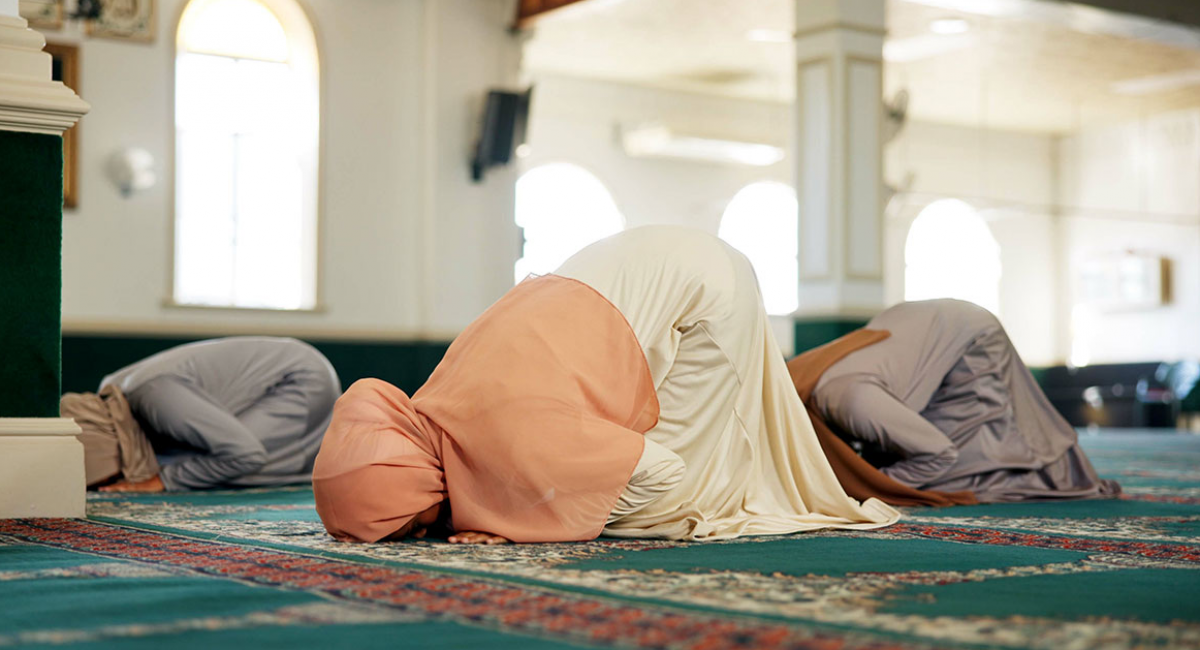
Among the phenomena often witnessed in some mosques and prayer halls (mushalla) is the practice of placing the women's prayer row (shaff) next to the men's row. Or having men and women in the same row. Some use a partition (satir) like a wall or cloth, and some have no partition at all. This kind of phenomenon occurs due to one of two possibilities: the ignorance of the mosque management regarding the Sharia (Islamic law) or their underestimation of the Sharia. Because, if they knew and understood the Sharia correctly, such a phenomenon would not be found. Besides, it is nearly impossible that there are still Muslims in this country who do not know the correct positioning of the men's and women's rows during congregational prayer (shalat berjamaah). So, what is the explanation of the scholars regarding this matter?
Imam Ibn Abdil Barr Al-Maliki said,
“There is no difference of opinion (among the scholars) that the Sunnah (recommended practice) for women is to stand behind the men. It is not permissible for them to stand in the same row with them.” (Al-Istidzkar, 2/270) Imam Ibn Rushd Al-Maliki said,
“As for the Sunnah of the woman is that she stands behind the man or men if there is a man other than the Imam, or behind the Imam if she is alone (as a follower). I do not know of any difference of opinion (among the scholars) regarding this.” (Bidayah Al-Mujtahid, 1/158) Imam Ibnul Aththar Ash-Shafi’i said,
“The position of the woman in prayer is behind the young boys, and even if there is no other woman with her (she is alone), she still stands alone (in the back). This is not disputed (in its ruling).” (Al-‘Uddah fi Syarh Al-‘Umdah, 1/416) Imam Az-Zayla'i Al-Hanafi said,
“It is not permissible to follow a woman (as an Imam) according to consensus (ijma’) due to the reason of the obligation of keeping (the women's row) behind.” (Tabyin Al-Haqaiq, 1/137) Al-Hafizh Al-‘Aini Al-Hanafi said,
“I say that in this report (the narration of Ibn Mas’ud) there is a command that is tabarruk (seeking blessing) by generally delaying the position of women in prayer, because there is no obligation to delay their position outside of prayer according to consensus (ijma’) (of the scholars).” (Al-Binayah Syarh Al-Hidayah, 2/343) Al-Hafizh Ibn Rajab Al-Hanbali said,
“This has no difference of opinion among the scholars. That is, women are forbidden to form a row with men. The rows of women have always been behind the men during the time of the Prophet (PBUH) and the Rightly-Guided Caliphs. This is why Ibn Mas’ud said, “Put them back where Allah has put them back.” (Fath Al-Bari, 6/287) From the statements of these scholars of the schools of fiqh, it can be concluded that the women's row must be behind the men's row, and women are forbidden to be in the same row or stand next to the men when praying in congregation. This prohibition has become a consensus (ijma’) among the scholars. The basis for this consensus or agreement is the action of the Prophet, as narrated by Anas bin Malik,
“The Prophet (PBUH) once prayed in the house of Ummu Sulaym. I and an orphan stood behind him, and Ummu Sulaym stood behind us.” (HR. Al-Bukhari: 871 and Muslim: 660) While the prohibition is based on the saying of the Prophet,
“The best of the men's rows is the first one and the worst is the last one. The best of the women's rows is the last one and the worst is the first one.” (HR. Muslim: 440 from Abu Hurayrah) The scholars, however, differ regarding the status of the women's prayer if their row is next to the men's row, as is found in some mosques or prayer halls today.
1. Declaring it Forbidden and Judging the Prayer to be Invalid (Batal)
This is the opinion of the Hanafis and the Zhahiris. However, the Hanafis only judge the prayer to be invalid if there is no boundary or barrier between the men's and women's rows. Imam Ibn Hazm Adh-Dhahiri said,
“If a woman prays next to a man without following him (as an Imam) and without following his Imam, then that is permissible. But if the man did not intend to lead her, but the woman intended to follow him, then the man's prayer is complete (valid) and the woman's prayer is invalid (batilah). If the man intended to lead her and the woman was able to be in the back row (but chose to pray next to the men's row), then both of their prayers are corrupt (fasidah) entirely. If both are following one Imam, but the woman is unable (to be in the back) and the man is unable (to be in front of the women's row), then both of their prayers are complete (valid). However, if the woman is able to pray behind the man, but the man is unable to order her to pray behind his row, then the woman's prayer is invalid while the man's prayer is complete (valid). But if the man was able to make her pray behind his row, but he did not do so, then both of their prayers are invalid entirely.” (Al-Muhalla, 2/332-333) Imam An-Nasafi Al-Hanafi explained,
“If a man's row is alongside a woman who is desired (mushtahāh) in an absolute prayer (which involves bowing and prostration) that is performed jointly (in congregation), then it is forbidden to perform it in a unified place without a barrier (at least an arm's length high), so the man's prayer is corrupted (fasadat).” (Kanz Ad-Daqaiq, 1/168) Imam Siraj Ibn Najim Al-Hanafi said,
“(So his prayer is corrupted), that is, the prayer of the one standing alongside (the woman), because the man is ordered to set back (the woman's row) based on the saying of the Prophet (PBUH), “Put them back where Allah has put them back.” If he does not set back the woman's row, then he has neglected the obligation of the position (in congregational prayer), so his prayer is corrupted, but not the woman's prayer, if he is not the Imam. However, if he has signaled to her, but the woman did not move back, then she is the one who has neglected it (the obligation of the position), so the woman's prayer is invalid, but not the man's prayer.” (An-Nahr Al-Faiq, 1/249)
Evidence & Argumentation
The narration (Athar) of Ibn Mas’ud. Abdullah bin Mas’ud said,
“Put them back where Allah has put them back (the women's rows).” (AR. Abdur Razzaq in Al-Mushannaf: 5115 and Ath-Thabarani in Al-Kabir: 9484) Many books attribute this saying of Ibn Mas’ud to the Messenger of Allah, even though it is not a saying of the Messenger of Allah. This was pointed out and lamented by Al-Hafizh Al-‘Aini and criticized by Ibn Ab Al-‘Izz and Ibn Al-Hammam, all three of whom are Hadith scholars of the Hanafi school.[1] Nevertheless, the saying of Ibn Mas’ud is consistent with the action of the Prophet and what he demonstrated in front of the companions, which is to place the women behind the men's rows. Therefore, opposing it is the same as opposing the rule of the Messenger of Allah. Opposing his rule can lead to the invalidity of the prayer. Another evidence is analogy (Qiyas) to the consensus (ijma’). Because the scholars have consensus that it is invalid for a woman to be an Imam for men. This indicates that it is forbidden for a woman to be parallel to or, even more so, in front of the men's row in congregational prayer. This is because the position of the Imam must be in front of the row, and the one who is allowed to be next to the Imam (if there is only one follower) is a man, not a woman. This is because if there is only one female follower, she must still be behind the Imam according to consensus, unlike if the follower is a man. Thus, the presence of women parallel to the men's row is the same as exceeding their position as followers, and that can invalidate the prayer, just as the prayer of a male follower is invalidated if he exceeds the Imam's position during prayer. As for the evidence for the barrier – for the Hanafi school – it is the response of Umar bin Al-Khattab to Al-Harith bin Mu’awiyah Al-Kindi. Al-Harith asked,
“Sometimes a woman and I are in a narrow building, and the time for prayer arrives. If I pray, she is next to me. If she prays behind me, she will be outside the building (because it is too narrow)?” Umar replied, “You should put a barrier between yourself and her with a cloth, and then she may pray next to you if you wish.” (AR. Ahmad in Al-Musnad: 111) Wallahu a’lam (And Allah knows best)
2. Judging the Prayer to be Valid and Considering it Disliked (Makruh)
This is the opinion of the majority of scholars, namely from the Malikis, Shafi’is, and Hanbalis. This view is also favored by Ibn Abil ‘Izz Al-Hanafi from the Hanafis. This means that congregational prayer with the rows standing side-by-side can make the prayer disliked (makruh), thereby removing the excellence and reward of the prayer. Although the prayer remains valid and does not need to be repeated. Al-Allamah Al-Hijawi Al-Hanbali said,
“And it is disliked (makruh) for her (the woman) to stand in the men's row. If she does so, the prayer of the one next to her is not invalidated, nor the prayer of the one behind her, nor the prayer of her Imam, nor her own prayer.” (Al-Iqna’, 1/171) Imam Al-Baghawi Ash-Shafi’i said,
“If a woman comes, the man should delay her (row) when she enters (to join the congregational prayer). If a woman stands next to the Imam of the men or follows him (while standing next to him or in the men's row), it is disliked (makruh), but his prayer is still valid.” (At-Tahdhib, 2/278) Imam An-Nawawi Ash-Shafi’i said,
“The prayer of a woman in front of a man or next to him is disliked (makruh), but her prayer and the prayer of the followers who are in front of her or alongside her are valid according to (our madhhab) and according to the majority (jumhur) of scholars.” (Al-Majmu’, 4/299) Imam Al-Kharashi Al-Maliki said,
“It is disliked (makruh) for a man to pray among women's rows and for a woman to pray among men's rows, but it does not invalidate the men's prayer nor her own prayer, contrary to the opinion of Abu Hanifah (who ruled it invalid) with some details according to him.” (Syarh Mukhtasar Al-Khalil, 2/29)
Evidence & Argumentation
The original ruling is that one should not judge a prayer as invalid unless there is clear evidence that invalidates that action. As for a follower's mistake in the position of the prayer row in a congregation, it does not invalidate the prayerbased on the action of the Prophet. Abdullah bin Abbas said,
“One night, I performed the night prayer to the left of the Prophet. He took my hand – or my upper arm – until he placed me on his right.” (HR. Al-Bukhari: 728 and Muslim: 723) If it were invalid, the Prophet should have explained it to Ibn Abbas when he made the mistake of standing on the Prophet's left. Instead, he moved Ibn Abbas to his right side in the middle of the prayer. This indicates that the prayer of a person who makes a mistake in the position of the row is not invalidated. This also applies to women who make a mistake in their row position by standing in the same row as men.
Conclusion
From this, it can be concluded that standing side-by-side in prayer rows for men and women can endanger the congregational prayer. Some scholars ruled it invalid. At the very least, it eliminates the excellence of the congregational prayer and makes it disliked (makruh) because it violates the Sunnah of the Messenger of Allah, according to the majority of scholars. The scholars also agree on the prohibition of the position of men and women in the same row or the men's row being side-by-side with the women's row. The difference among the scholars lies only in the type of prohibition and its consequences, not the prohibition itself. Mosque and mushalla management should take note of this, in order to maintain the correctness and excellence of the congregational prayer ritual in their respective places. How unfortunate it would be if, due to this mistake in the row position, the reward and excellence of the entire congregation's prayer were lost. Moreover, some scholars ruled that the congregational prayer is invalid. Wallahu a’lam bis shawab (And Allah knows best what is correct)
Sumber Referensi:- Al-‘Aini in Al-Binayah Syarh Al-Hidayah 2/343, Ibn Abil 'Izz in At-Tanbih ‘ala Musykilah Al-Hidayah 2/610-611, Ibn Al-Hammam in Fath Al-Qadir 1/360.

 ?>)

 ?>)